
Go (coco)nuts! Share this story with your friends.
Ascott hotel opens another location in Metro Manila, this time in Bonifacio Global City in Taguig. As a part of its opening bonanza, Ascott flew in Chef Malcom Lee of Singaporean restaurant Candlenut. It’s a perfect partnership, chef Lee and Ascott, as both promote the refined versions of local Singaporean culture through food and hospitality.
At the special sit-down lunch held at the hotel’s Alta Restaurant, chef Lee served his interpretation of Peranakan cuisine. Also known as Nonya cuisine, Peranakan combines Chinese and Malay cooking traditions. “You won’t find it in any hawker center. It’s exclusive to a very small group of people,” the 30-year-old chef says. And unfortunately, it is a dying tradition.
Coconuts Manila had a chance to talk to Malcolm about his career and his food over lechon prepared by Margarita Fores (who spearheads Alta) before he flew back to Singapore.
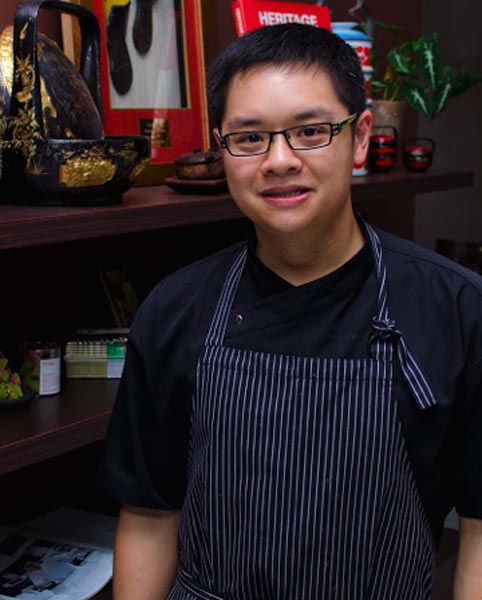
Malcolm aims to preserve his country’s treasured cuisine via Candlenut
When did your love for food and cooking start?
I don’t think there was any point when I fell in love with food. Food has always been a big part of my family. I grew up with foodies. Peranakans are known for their food. My grandma and mom cooked a lot so food has been a part of my life. I’ve always been interested with the things they do in the kitchen. I tried to help but my mom always said, “Do not disturb me,” so she could cook faster.
So there was an interest early on but it had to be shelved temporarily?
I wanted to go into food but my mom said no, “I want you to finish your degree first. You can do what you want after.” When I had the chance to travel to the US, I got a job in Starbucks. But I needed more money so I could pay for my bills and travel a bit. My friend and I also got a second job in a newly opened restaurant in Washington. We were to prep for the chef, but on the first day I went in, there weren’t enough chefs so I had to be a line cook. I cooked already and for the first time in my life, I felt that this was what I wanted to do. I felt alive. I knew from that point on. I went back to Singapore and explored more.
How did you end up loving and promoting Peranakan cuisine?
I was always into Western fine dining. Asian cuisine was of no interest to me before. I just wanted French. But in the local chef academy I went to, it was half-Asian, half-Western so I had to learn. That was a turning point for me. When they taught Asian, it was Thai chefs who taught Thai cuisine, Indian chefs taught Indian cuisine and so on. There, I realized that each area is very diverse. Every region is different. Asian cuisine has a lot of history, culture, flavors and potential. Then I thought, maybe I should go back to my roots, which is local Peranakan style of food. After a while, I decided to stick to that, but prepare it at a more refined level.
What is Peranakan cuisine exactly?
Singapore is a trading port where traders came from all over the world. When the Chinese came, they intermarried with the Malay community. That’s how it came together. It’s a cuisine that has become available only to Peranakan families. You won’t find it in hawker centers. It’s exclusive to a very small group of people.
How has the reception among the people been?
In Singapore, there’s a lot of traditional, old-fashioned grandmother-style of cooking so it’s hard. People are hesitant to pay for my food because they can eat that at home. But the grandmoms are getting old and the young people don’t want to learn. So it’s a dying cuisine in Singapore. And people who are doing food business now there do what’s trendy and what makes money. So it’s been hard. The challenge is how to make old-fashioned food young, sexy and relevant to 2014. I look at other cuisines for inspiration, like the evolution of French cuisine.
What do you want to bring to the table with your restaurant Candlenut?
I want to reach that point when people go to Singapore and what locals would recommend is my restaurant, Candlenut. I like them to say that it’s a refined style of Peranakan cuisine, something you can’t find in the rest of the world. It’s already a unique cuisine but it becomes even more unique because of my interpretation. A lot of the recipes came from my mom and grandmom. I tasted and adjusted some of them. They are mostly estimates so I had to take that and put structure in the recipes, so the product is consistent and flavorful.
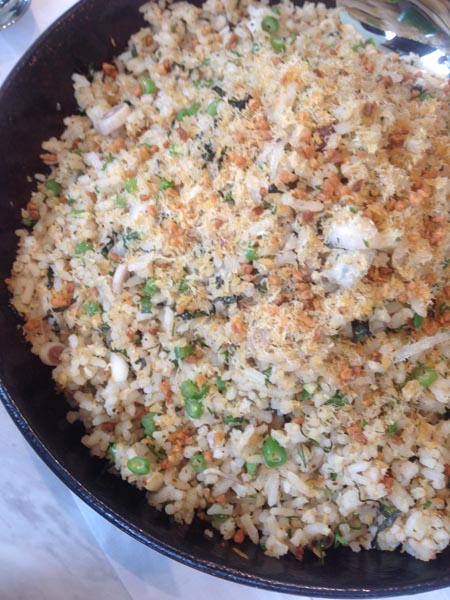
Nasi Ulam: Herbed steamed rice with dried fish flakes
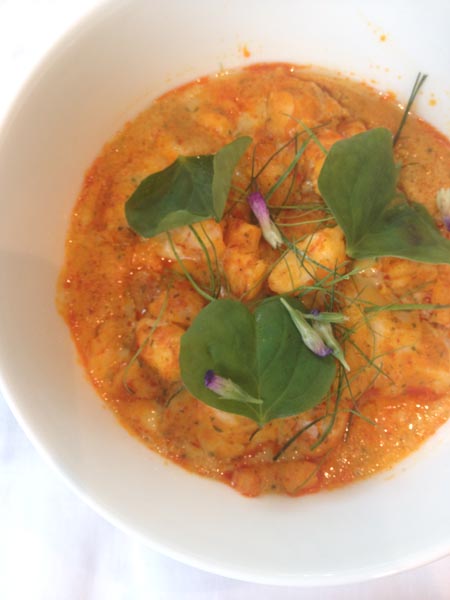
Steamed Lapu-lapu and Tiger Prawn Otah: Seafood custard
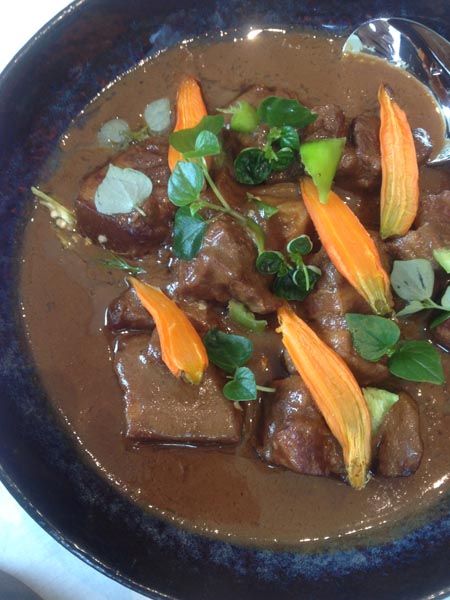
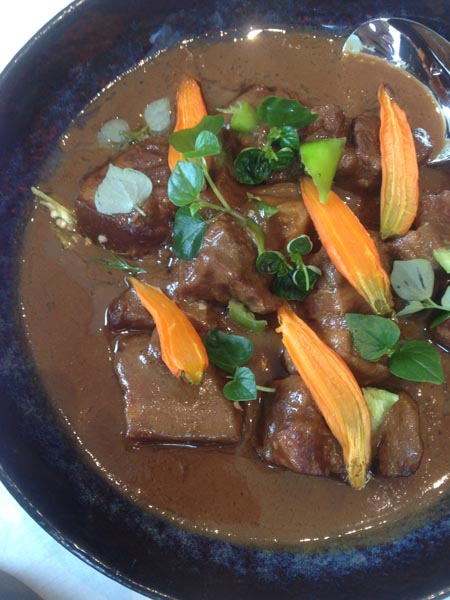
Babi Pongteh: Nyonya-style slow-braised pork
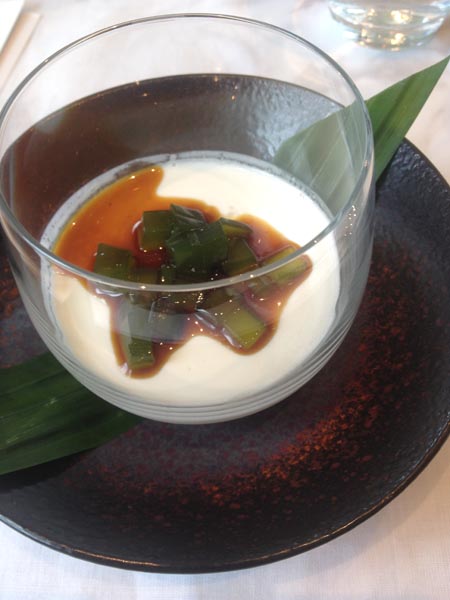
Candlenut’s Signature Chendol Cream: Coconut pannacotta
with pandan jelly and palm sugar syrup
Ascott Bonifacio Global City Manila; 28th Street corner 5th Avenue, Bonifacio Global City.
Candlenut Restaurant; 331 New Bridge Road, New Bridge Road, Singapore.
Photo of Chef Lee: Bibik Gourmand