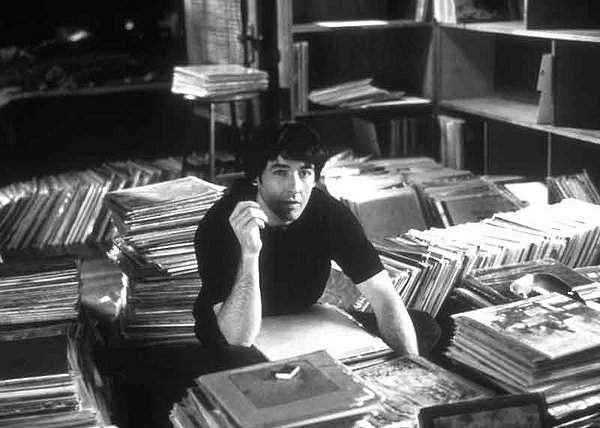

“Yes, oo, tumindi yung demand for vinyl,” confirms Joel Devicais, owner of Vinyl Dump Thrift Store (Unit G2 Cubao Expo, Araneta Center, Cubao, QC; +63 2 4398558), which is fast becoming a hangout among vinyl collectors and audiophiles. This is pretty much what everyone we interviewed for this feature answered us, too, when we asked about the state of vinyl.
We, in fact, started to feel it unnecessary to confirm what we’ve been seeing in social media and hearing in hipster cafés: In the past two years, Manila has seen the resurgence of vinyl records. Apart from mall staples like Astrovision and Odyssey, which have started to carry vinyl records as paninda, new-ish record stores like The Grey Market (G/F Bellitudo Lifestyle Strip, 79 Katipunan Road, White Plains, QC; +63 2 7918704) have been popping up, while vinyl swaps are being organized left and right. Not to mention online stores like Satchmi and Happy Dads.
Sure, this might just be another one of them trends, but like all of them trends, a few hundred (fifty?) kids, coming-of-age will probably get stuck to this and have a life-long affair with vinyl. In case anyone of those hundred (or 50) are reading, here’s how you go about building your vinyl collection.
1. Consider the condition of the record. Are there scratches? Is it warped? Does it come with a shrink-wrap? Is anything falling off?
2. Remember, the presses. When talking records, “imported” and “local” don’t necessarily mean foreign and OPM. A lot of times, they mean where the record was pressed: here or abroad? So you can have a Beatles record and it can be locally pressed.
a. If you haven’t already, you will start to hear about how “Japanese pressing” is special. Apart from the technology, “Japanese pressed are collectible for it’s obi strip,” says Jay Amante of The Grey Market. The obi strip is the strip of white paper at the edge of the record. See below:
Photo courtesy of Chonx Tibajia via instagram
“So may additional element na [yung record], making it extra special. The Japanese are also very particular with records, sobrang linis.” Adds Toti Dalmacion, a well-known record collector and the man behind Terno Records: “In Japan, they make it a point that when they release an album, meron silang ibang cut. Para bibilhin mo yung local pressing nila dun, as opposed to the imported one. Maganda na yung quality, may bonus cuts pa. It really makes it their own.”
These little extras then give rise to “hard to finds” and even “limited editions,” notes Happy Dads owner Aaron Favila.
b. Then there’s the thing. “Remastered” and “original.” Vinyl has gone through quite a few media and technology. There’s the cassette, the CD, the MP3, and god knows what. Collectors hold original pressing in higher regard than remastered ones because a lot can get and have gotten lost in translating technology. “Digital sounds tampered,” says Devicais. “Masyadong malinis.” So say, you see a shiny, shimmering “remastered” Jimi Hendrix and an old one from the ’60s. Put the remastered one back down and pay for the original. It will cost more, but in record collecting, that doesn’t mean anything.
3. It’s personal. Almost all agree that your record collection is a thing of personal interest. “Kanya-kanya,” everyone agrees.
4. But record collecting is about the music. “That’s the main thing,” says Toti. The rest are what makes it so addicting: design, packaging, smell of opening the sleeve. “It’s the overall feeling—the album design, gatefold, single, iba-iba. And then there’s the smell.”
5. Start with what you like. “A collection is useless if it’s just gathering dust in your cabinet,” says Favila. You must be able to enjoy it. So you may have a Japanese press of the Velvet Underground in mint condition but if you don’t like the VUs, then you better be in it, at the very, very, very least for the money—and even that, is super low—because that’s very sad, if you’re not. What’s that record doing, gathering dusting in your shelf?
6. Take the next step. Jay’s point is a little more hardcore: “Start with what you don’t know. Puwede mo nang i-YouTube yung alam mo e,” he says. So maybe, baby steps: start with what you like, and then go further. Let’s your natural curiousity lead you—what’s that record behind that Al Green one?
If you come across an OPM record, get it, pronto!
7. OPM is expensive. Presses aside, you’ll want to look out for OPM releases. Why? Because we’ve stopped pressing records since the 1990s. Very few OPM vinyl records are in circulation, making them hard-to-find, unique, and very valuable. Thank heavens for names like Heima, Pasta Groove, Tarsius, Marie Jamora for choosing to go vinyl with their releases.
8. The point of looking. “It’s the infinite search for artists na hindi mo pa naririnig,” says Devicais. “It then becomes not only about listening to music. Saan siya nanggaling? Sino mga kasabayan niya? Ano pa ang meron duon? It’s educational.”
9. The thrill of looking. It’s not just discovering new music, it’s also the thrill of getting records cheap. “That’s the thrill of digging, na maka-chamba ka,” says Toti, telling us about this one time he chanced upon gold—800 releases owned by a Japanese bedroom DJ, in Evangelista (Makati), pristine condition, 12-inch release.
10. Make it mean something. Don’t just get into it because it’s convenient. “It’s not about ordering online or in discogs,” says Toti, “kasi walang story yung paghahanap mo nun.” Get your hands dirty. Dig through crates and crates of records. Spend the whole day looking for IT. Let the records speak to you.
11. After the music, the sound. It’s become a cliché, but records really do boast of that thick warm tones of which digital recordings are stripped out off. “When they cut the record, yung frequency na sa low end. Hindi mo ito makukuha sa CD,” explains Toti. “Ang CD, masyado malinis at manipis. It’s medyo clinical. Ang records, humininga. It’s cliche, yes but totoo.”
a. So appreciate that sound and get equipped. A proper set of speakers and some amplifiers will help you experience that. “A good one doesn’t have to be expensive,” says Jay. A good one has a separate phono, he advises. Keep an eye, or ear out for that.
12. Let your friends know. Here’s the thing: you want to let that person who is getting rid of his lolo’s vinyl collection know that you exist. How do you make that happen? You let people know you’re into it. The more people who know, the better chances you have of getting into those people’s radars.
13. Don’t get into it just because…it’s uso. While many sellers don’t mind accommdating a half-baked curious George—hey, it helps their sales!—Devicais has a good advice: “Don’t get into this if you have limited resources. It’s addicting and mahal itong hobby na to.”
MORE FROM COCONUTS MANILA:
– Meet the woman behind YouTube sensaton ‘Shuleng’
– Carinderia crawl with the lady who translated ‘Taong Nyebe’
– Liam Neeson does a Manny Pacquiao impression
Main photo: Movie still from High Fidelity