
The current dengue outbreak hitting the country shows no signs of letting up, and medical experts revealed yesterday that the discovery of a fifth dengue vatiant in Malaysia, named “Den-5”, is a sign of more troubles on the horizon.
Malaysian Medical Association president Datuk Dr NKS Tharmaseelan said dengue researchers believe the new strain could have been circulating in the jungles of Malaysia and Indonesia for thousands of years before jumping into the urban transmission cycle.
Although Den-5 had not been detected in humans, except for one isolated case where a Sarawak man was infected several years ago, the need to contain the spread of the strain, along with new, as-yet-unidentified variants of dengue, is of the utmost importance.
The Den-5 virus is exclusive to Sarawak so far, and is the fifth declared strain of dengue in the country. It is the first new subtype of the disease in 50 years, and medical experts believe its discovery could be another challenge to the development of a dengue vaccine.
Dr Tharmaseelan said, “This threat warrants better monitoring of dengue infections in Malaysia and the Indonesian archipelago, as researchers believe there may be more dengue variant to be discovered in the jungles of these two countries.
“The jungles are among the places where they believe dengue viruses evolved in primates, from ancestral viruses.
“The new subtype has only been found in Sarawak, where it could be circulating among macaques living in the forests, but its discovery calls for urgent preventive measures in controlling the disease.”
Dr Tharmaseelan told the New Straits Times that the Den-5 subtype was first identified during screening tests on virus samples collected during an outbreak in 2007.
It was reported that dengue fever resulted in 17 deaths throughout the country from January to Feb 2, this year, an increase of 240 per cent or 12 deaths compared with only five cases for the same period last year.
Throughout the period, 9,453 cases of dengue fever were reported nationwide, up 269 per cent or 6,894 cases, compared with 2,559 cases during the same period last year.
Health Ministry vector borne diseases section head Dr Rose Nani Mudin said analysis from blood samples, collected from dengue patients in 44 clinics and hospitals nationwide, showed that most of them were infected with the Den-2 virus (most dangerous) followed by Den-1, Den-4, and Den-3.
“Patients with Den-2 virus will show more severe effects, such as dengue shock syndrome and bleeding,” she said.
Related: KL Residents Apathetic To Dengue Threat; Dengue alert nationwide
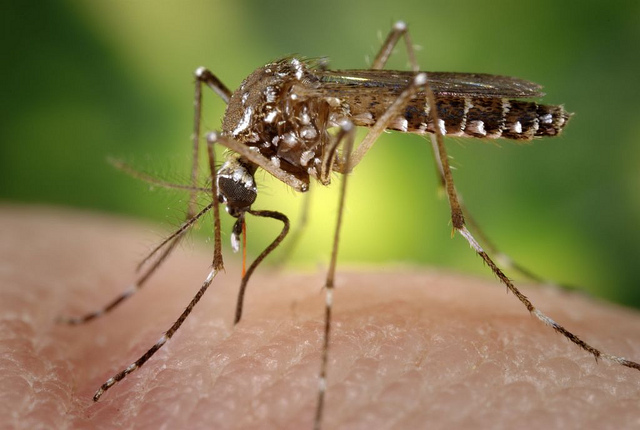
Photo: Sanofi Pasteur / Flickr
Source: New Straits Times