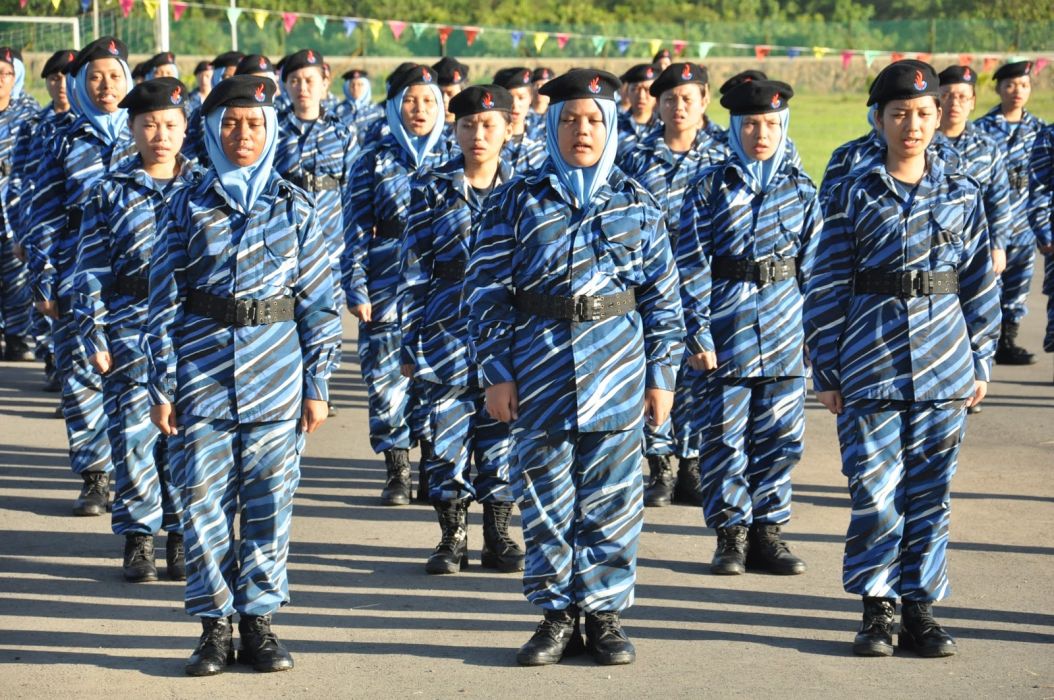

As part of the Federal Government’s expenditure adjustments for Budget 2015, the National Service (NS) programme for Malaysian youth has been put on hold for a year.
National Service Training Department (JLKN) director Mohmed Asri Yusof told Harian Metro his team was prepared to implement the deferment of the programme as per Prime Minister Najib Razak’s announcement yesterday, and would use the downtime to reevaluate and improve the National Service initiative.
“For now, PLKN is still operating as per usual. Trainees inducted on December 6 will carry on with their training until they graduate on February 14.
“After that date, we will put new registrations on hold as has been announced by the Prime Minister,” he said.
The freeze on the Naitonal Service programme was part of the PM’s announced raft of budget rationailisation exercises, in light of the drastic drop in global oil prices and other external economic factors.
Freezing the National Service for a year would save the Federal Government some RM400 million, although all major training and administrative staff connected to the programme would remain on Putrajaya’s payroll.
“We are planning to use this downtime to transform the National Service programme with the strategic cooperation of other government ministries and agencies such as the Ministry of Youth and Sports, the Education Ministry, the Human Resources Ministry, the Ministry of International Trade and Industry, the Works Ministry, and the Ministries for Rural Development and Federal Territories,” Mohmed Asri added.
However, he did voice some concern over the possibility of this year’s trainees being pushed over into next year’s programme, causing overcrowding at National Service facilities.
“With this year’s second and third batch postponed, about 100,000 students will pushed to next year,” he told the print edition of The Malay Mail.
“They would most probably merge with the existing batch.”
Added to the estimated 150,000 inductees into the programme slated for 2016, that wold result in 250,000 National Service trainees nationwide next year.
“I will discuss and figure out how to tackle the issue,” Mohmed Asri said.
“We have yet to decide what should be done to accommodate the extra numbers.”