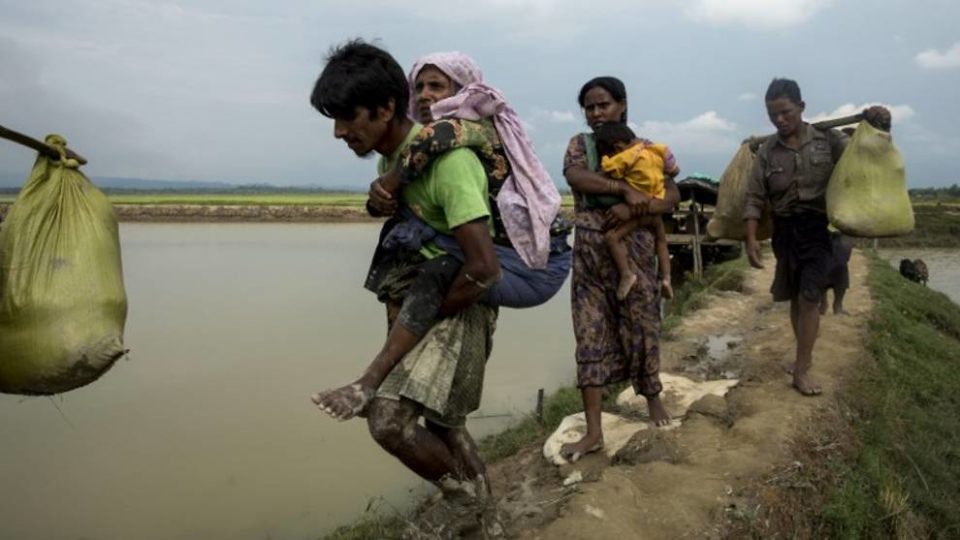

Malaysia has summoned Myanmar’s ambassador to the country yesterday, saying that it was “gravely concerned” over the continued violence and terror being inflicted on the Muslim Rohingya of Rakhine state.
Malaysian Foreign Minister Anifah Aman told the press that the unbridled campaign of violence is indicating that there is “little if any” profess in a peaceful solution for all parties. He went on to say that Malaysia calls for the situation to be taken seriously at the international level.
Last week, 4,000 Rohingya in Malaysia gathered at the Myanmar embassy in protest, calling for greater action from their host country regarding the genocide, on the eve of Malaysia’s National Day.
The grassroots protest gained traction within the group via WhatsApp, and community leaders say the numbers would have been even greater, had police not stopped the bus loads more that were entering the city.
Anifah added in his statement that he hoped that the principles of human rights extolled by Myanmar’s leader, and Nobel laureate, Daw Aung San Suu Kyi, would also be extended to the Rohingya.
In a separate statement, Malaysians have been told to put-off all non-essential travel to Rakhine state, and to exercise maximum caution.
While Malaysia’s verbal contempt for the treatment of the Rohingya is strong, there have been less than savory stories circulating in the international press regarding the treatment of those who come here as refugees. Earlier this year, The Guardian highlighted the number of official deaths while in Malaysian detention centers. The article went on to claim that this number could be far higher.
Myanmar’s Muslim Rohingya are mostly concentrated in the northwest of the country, near the border with Bangladesh. The population is estimated to be around 1.1 million; nearly 125,000 have recently fled to Bangladesh.
Accusations that the Myanmar army has placed landmines at the border to dissuade the return of refugees have dominated the headlines this morning.