
You might be griping about the heat and the scant water supply you’ve been experiencing throughout this dry season in KL, but there’s one more thing to blame on the drought: experts are saying the weather’s been driving Malaysia’s dengue outbreak to ever higher levels.
Dr Lee han Lim, head of the Entomology Unit at the Institute of Medical Research, said conditions such as intermittent rain and hot weather make for more conducive conditions for mosquitoes to breed, and the lack of heavy rain prevents mosquito larvae from being washed away and killed before they mature.
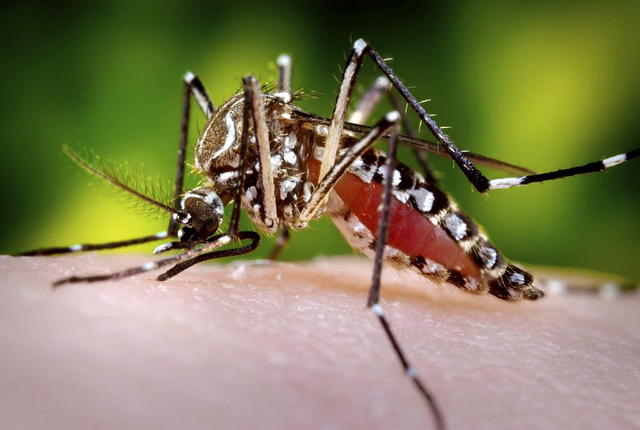
The aedes aegypti mosquito is the carrier for the dengue virus.
The hot weather also makes the mosquito breeding process more efficient, as it shortens the life cycle of the mosquito.
“If heavy rain happens often, dengue will not occur frequently because the Aedes mosquitoes are not able to breed productively, but, if intermittent rain happens, then the condition will be conducive for the insect to breed.
“Mosquitoes need time to breed – at least two to three weeks – and a certain period to transmit the dengue (virus),” he told Bernama.
Meanwhile, Deputy Prime Minister Tan Sri Muhyiddin Yassin made the alarming announcement that Malaysian health authorities are bracing for 60,000 reported cases of dengue fever this year.
The projected number was based on the 98 per cent increase in dengue cases in 2013 (43,346) compared to 2012’s 21,900 cases.
In the frist three months of 2014 alone, there have been more than 18,000 recorded cases of dengue fever, 64 per cent of which were registered in Kuala Lumpur, Putrajaya and Selangor.
Related: Dengue alert nationwide; Dengue, drought and now, dust: the haze returns to KL
Photo: Sanofi Pasteur / Flickr