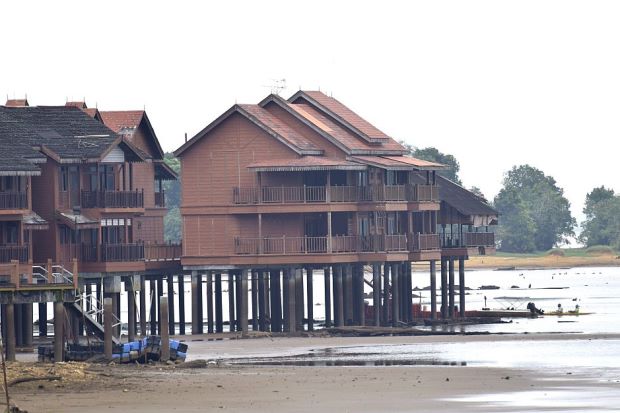

Sure, the weather is cooling off somewhat in the Klang Valley, but it seems that the El Nino phenomenon won’t be gone for long.
According to one academic, the El Nino phenomenon — responsible for bringing with it hot weather across the country — would likely occur more often in the future.
Why? It’s because of rising carbon dioxide levels, says University Malaysia Pahang (UMP) Civil Engineering and Natural Resources Faculty senior lecturer Dr Nurul Nadrah Aqilah Tukimat.
VIDEO: Water shortage at Bukit Merah dam the ‘worst in history’
READ: Current El Nino is the strongest in 60 years, says expert
Global temperatures have risen drastically, she added, due to this factor.
“In 2012, the phenomena had already existed but Malaysia was not affected and in 2014 we experienced a weak El Nino. Based on the pattern, we probably would experience the El Nino phenomenon once in two years,” she was quoted as saying in a report by Bernama.
The usual cycle was once in four to seven years, she added.
According to her the global temperature in December made a one degree Celsius leap — a ‘drastic one — compared to the 02. to 0.6 degrees Celsius before.
“This situation has resulted in less rainfall and water shortage especially in the northern states,” she told Bernama.
Schools have been ordered to close over the last month and shocking photos have emerged from a drying up Bukit Merah Dam (also known as Bukit Merah lake), Malaysia’s oldest dam.
Deputy Prime Minister Datuk Seri Dr Ahmad Zahid Hamidi was quoted as saying in report by the New Straits Times that seven out of 41 dams in the country were at critical level.
The dams are Timah Tasoh, Gemencheh, Lebam, Congok, Layang, Labong and Bukit Merah.