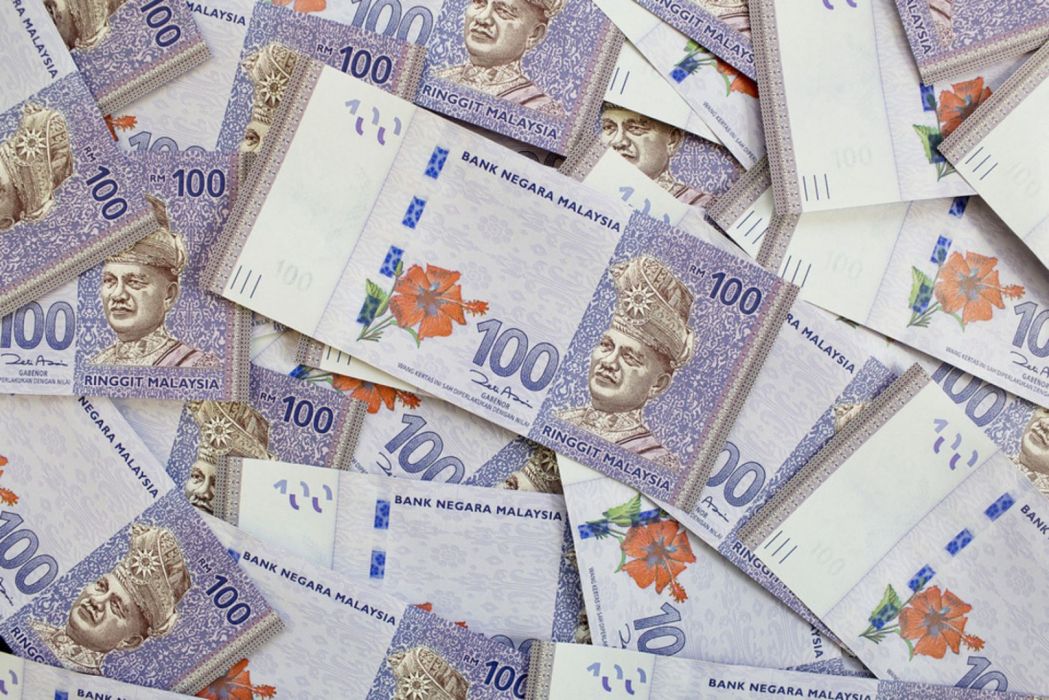

Malaysia’s central bank conceded that the ringgit has gone through a sharp undervaluation, but does not plan on pegging the national currency to the US dollar, as had happened after the 1998 financial crisis.
Bank Negara Malaysia’s (BNM) governor Zeti Akhtar Aziz said the drop in the ringgit’s value was unsurprising, due to the drop in global oil prices, and the US Federal Reserve ending its bond purchases last year, signalling a rise in US interest rates.
The ringgit is now trading at RM3.70 to the dollar, a drop of 14.4% since last September, well in advance of previous predictions that it would only slump to that level in September this year.
Despite the devluation, Zeti told the Washington Post that BNM would not resort to pegging the ringgit to the dollar as it did following the 1998 Asian financial crisis, as could cause an “extreme period of dislocation” and “pain” to Malaysia.
In 1998, the ringgit was pegged at 3.80 to the USD, as a measure to ward off currency speculation and to lift Malaysia out of the Asian financial crisis. The peg was abolished in 2005.
Zeti said the ringgit will eventually bounce back due to Malaysia’s strong economic fundamentals, such as a low unemployment rate, a strong banking industry, and a high savings rate.
“At this stage, it is significantly undervalued,” she told a news conference in KL. “These good fundamentals would support a stronger currency.”
She said Bank Negara would only intervene in financial markets to maintain “orderly” conditions and not to prop up the ringgitat any level.
Malaysia’s economic growth is forecast to ease to 4.5-5.5 percent this year, from 6 percent last year. Inflation however, is expected to be contained at 2-3 percent, Bank Negara said.
Know about something happening in KL and Malaysia? Want to share? Send us an email: kl@coconuts.co – don’t just read the news, make it!
Get Coconuts news delivered to your inbox! Subscribe to our newsletter below for a chance to win a limited edition Coconuts hat.