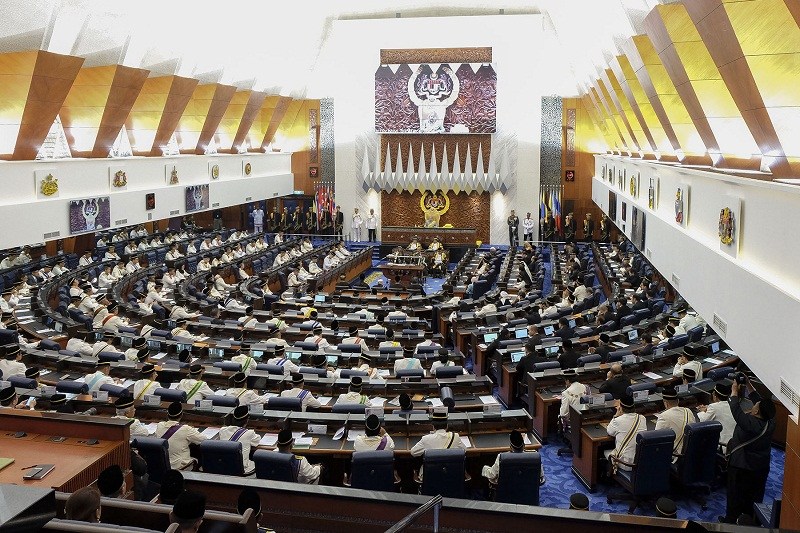

Following a meeting in the Dewan Rakyat (the lower house of parliament) yesterday, Home Minister Muhyiddin Yassin announced that foreign missionaries entering Malaysia will undergo background checks before being granted permission to hold speaking engagements.
Muhyiddin added that this was to ensure that no new visitors to the country would be preaching “deviant teachings.”
“Whoever comes here, regardless of the form of talks, will be monitored. For Muslim missionaries, there are the State Religious Councils. Those found not having credentials, will not be allowed. We will also monitor non-Muslim missionaries as well,” he told MPs during a debate on the 2020 Supply Bill yesterday.
Currently, priests, pastors, monks, and other missionaries entering the country are given a 12-month professional visitor’s visa, which can be extended for a maximum of a 36-month stay. (Though, if you’re a certain Islamic televangelist, wanted by your home country over allegations of embezzlement and inciting terrorism, you might just be eligible for Permanent Residency. Wink! And yes, we are talking about Zakir Naik, who seems to be here to stay, despite some rather unsavory comments about Malaysians of Chinese and Indian descent. But we digress!)
The Home Minister also addressed the current limbo status of individuals granted United Nations High Commission for Refugees (UNHCR) cards, saying that the government is reviewing whether the cards should be granted before Malaysia’s Immigration Department gives approval.
Specifically, Muhyiddin mentioned the case of Rohingyas entering the country with no documents to prove their provenance and being given UNHCR cards, despite being considered from an “international aspect … stateless persons.”
Malaysia never signed the 1951 Refugee Convention, nor its 1967 Protocol, which defined who qualifies as a “refugee,” and clarifies the rights of those who are given asylum and the responsibilities of nations hosting them. Malaysia functions as a transit point for refugees before they are granted residency in a third-party country, a process that can take often many, many years.
That being the case, the minister pointed out that Malaysia was not legally obligated to provide refugees employment opportunities. However, he added, from a humanitarian point of view, the country would be looking at possibly allowing UNHCR cardholders to work while they await their third country placement.
Concluding with the topic of yesterday’s news of potential plans to stop prosecuting drug addicts, Muhyiddin tempered expectations, saying that it would be a “major shift” from current policy and needed to be carefully examined. He did, however, concede that rehabilitation of serious addicts was an issue that needed review, with more effective measures to be taken.
And that’s all from yesterday’s debates! The Dewan Rakyat will be sitting from Oct. 15 until Dec. 11.