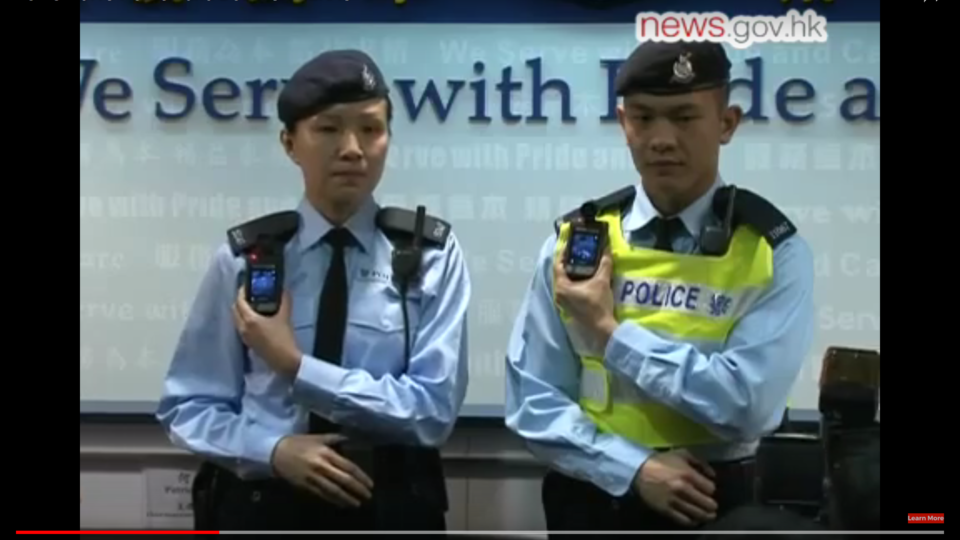

Bodycams for Hong Kong’s police force are all well and good, but the footage they record needs to be kept longer if they’re to do the job they’re intended to do, a police watchdog said this week.
At an Independent Police Complaints Council (IPCC) meeting on Tuesday, where plans to equip all office with bodycams by 2021 were discussed, council members said Hong Kong currently runs the risk of seeing complaints filed by citizens after the recordings had already been destroyed, news outlet HK01 reports.
Currently, footage shot on body cameras is kept for 31 days, a period set in place when the cameras were first introduced four years ago.
The watchdog’s chairman, Larry Kwok, suggested it was in the public interest for police to keep the recordings for at least two years, pointing to other countries like Canada, which mandates footage be stored for one year.
Oscar Kwok, director of the Hong Kong police department’s management service, defended the 31-day period at the meeting, saying it already took into consideration the investigative and evidential values of footage. Currently, footage is destroyed after a month if it has no “investigative or evidential value” or use for training purposes.
Despite that, Kwok said police are willing to review it at some point in the future.
The police are planning to increase the number of body cameras from currently 1,600 to 3,000 next year.
Importantly, the body cameras are not on at all times and are, in fact, turned on at an officer’s discretion, usually when dealing with potentially violent situations.
Police have previously rejected requests from the IPCC to reveal in detail internal guidelines governing the use of cameras by its officers.
Still, police at Tuesday meeting said the cameras have been useful and can produce a calming effect on tense situations. Last year, suspects adjusted their behavior and became less agitated in nearly 90 percent of cases in which the cameras were switched on, they said.
According to figures released by the police department, officers have made 724 separate recordings in 493 cases since the cams were first introduced. Footage in 172 of those instances went on to be used for investigative purposes or as evidence in establishing a case.