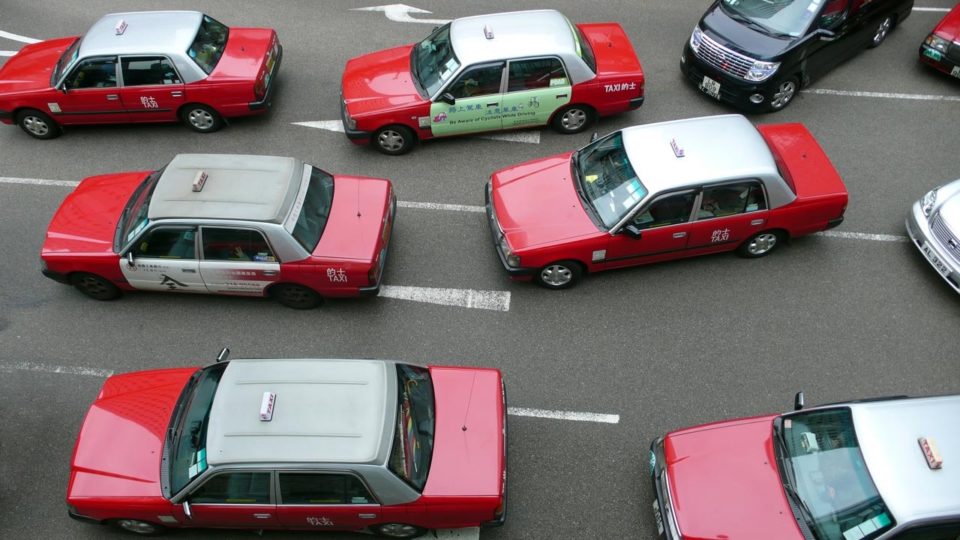

Once again leaping into whiny action at the first hint of competition, 40 Hong Kong taxi associations yesterday slammed a new bill — slated to be introduced in the LegCo today — that would allow three franchisees to launch premium cab services.
In a press conference, RTHK reports, the taxi associations said that they would be capable of providing the premium service, complete with online hailing — that is, if the government provides them with sufficient incentives.
“This new bill actually suppresses the initiative, the very good initiative, of the existing operators,” Hung Wing-tat, chairman of the Hong Kong Taxi Council said. “So we don’t think the government is doing a right job, and it doesn’t actually meet with the expectations of the passengers, the citizens, or meet with the legitimate expectations of the trade.”
What “initiative” Hung was referring to remained unclear, given that the premium taxi plan was intended in the first place to jolt the much-maligned taxi industry into getting its act together.
And speaking of initiative, the Taxi Council didn’t roll out online hailing until this March, and only then after a years-long battle against Uber, the industry’s only real competition in decades. Taxis, meanwhile, still don’t take credit cards, let alone the type of in-app payments that have been a standard feature of ride-hailing apps for years. Last month, the industry’s app, known as eTaxi, announced its roughly 4,000 drivers would be taking a bold step forward into the year 2006 by accepting Octopus cards.
The proposed premium taxi services would only involve about 600 cabs, a minuscule fraction of the total number of cabs in Hong Kong. But even so, the plan’s merits are dubious, with even the city’s Competition Commission saying the rationale behind the bill “makes no economic or common sense.”
The government’s reasoning appears to be based on a survey that found that nine percent of respondents would be willing to pay a higher fare for better service — which, if anything, sounds more like an expression of desperation at the current state of taxi affairs than of an actual desire for pricier cabs.
What is clear is that if anyone is going to reform the taxi industry, it’s not likely to be the industry itself. Complaints about taxis reached an all-time high last year, more than doubling over the past 15 years, a surge the industry explained away as the result of mere miscommunication between drivers and passengers. Uh-huh.