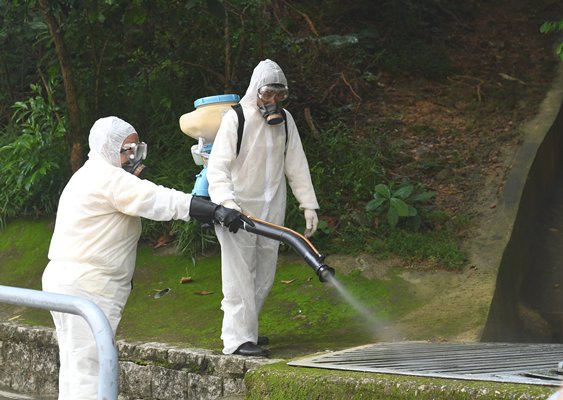

Authorities have closed Lion Rock Park as they work to contain the outbreak of mosquito-borne dengue fever throughout the city.
Sixteen local cases of the virus have been detected since the beginning of the month. Thirteen of those infected had visited Lion Rock Park in Wong Tai Sin.
The decision to shut the park came after a meeting of the Pest Control Steering Committee on Friday to discuss how to cope with the “highly concerning” recent outbreak.
“According to the assessment of the Centre for Health Protection, and also the number of affected individuals, and also the relation between the affected individuals and the places they have visited, we have focused our attention on Lion Rock Park,” under secretary for food and health Chui Tak-yi said in a statement.
“Because we would like to protect the exposure of other citizens to Lion Rock Park mosquitoes, we decided that it’s a right time and also appropriate measure to close the park for the time being.”
The island of Cheung Chau is also being looked at as another source of the fever.
One of the patients, an 84-year-old woman who lives on Cheung Chau, was confirmed to have been infected on the island.
In the most recently revealed case on Sunday, a 52-year-old also living in Cheung Chau, also recalled being bitten by a mosquito near his home.
The man, who tested positive for dengue virus serotype 3 — which is different from all the previously reported cases, which were serotype 1 — had also visited Dongguan in Guangdong during the incubation period.
Across all districts in Hong Kong, authorities will implement an “intensive anti-mosquito” program, including fogging to eradicate the insects in high risk areas and destroying mosquito eggs or larvae.
Dengue fever is clinically characterised by high fever, severe headache, pain behind the eyes, muscle and joint pain, nausea, vomiting, swollen lymph nodes and rash.
Some people may not develop symptoms, while others may experience only mild fever.
The virus’ incubation period ranges from three to 14 days, though is commonly four to seven. The CHP advised travellers returning from affected areas who feel unwell to seek medical advice quickly.
Excluding the local cases, as of August 17, 57 imported cases had been recorded in 2018. The cases were mainly imported from Thailand (25), the Philippines (10) and Cambodia (seven).