
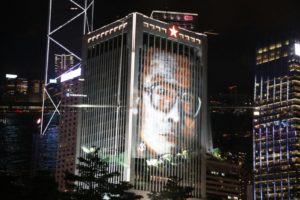
Hundreds turned out in Hong Kong last night to pay their respects to late Nobel laureate Liu Xiaobo, with an image of the pro-democracy Chinese dissident who died in custody projected onto the city’s People’s Liberation Army headquarters in an act of defiance.
Liu, a government critic and thorn in the side of the authorities for decades, died last week aged 61 after losing a battle with cancer, more than a month after he was transferred to a hospital from prison on the mainland.
The prominent democracy advocate, a veteran of the 1989 Tiananmen Square protests, had been sentenced to 11 years in jail in 2009 for “subversion”.
His death prompted an outpouring of grief in semi-autonomous HongKong, where pro-democracy forces must also contend with an increasingly assertive Beijing.
His ashes were buried at sea on Saturday, depriving supporters of a place to pay tribute, though thousands in the Asian financial hub took to the streets Saturday night, holding candles as they marched in his memory.
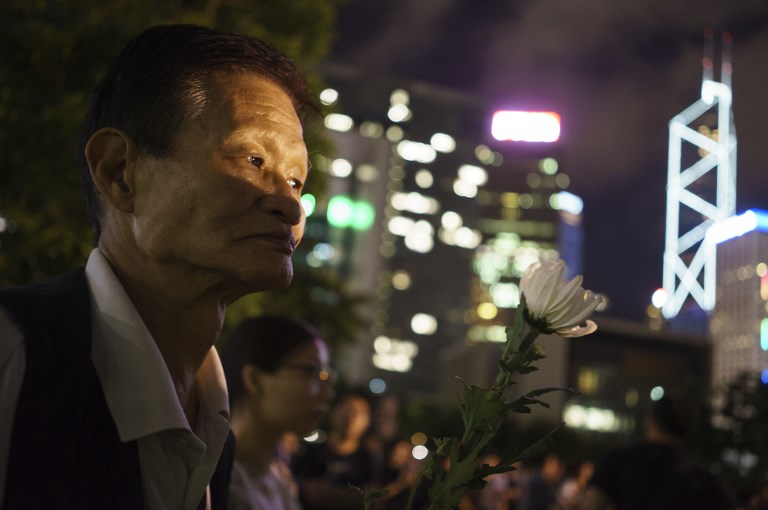
Supporters on Wednesday laid white flowers next to Liu’s portrait at another memorial event at a waterfront park in the city centre to mark the seventh day of his passing — an important date in Chinese tradition for those who have died.
“We should not forget him,” Yanki Lee, 45, who took part in a minute’s silence, told AFP.
“I think all who are out here tonight are very thankful for what he did from the bottom of their hearts,” she said.
The world had not heard from the Nobel peace prize winner since he was formally arrested and jailed, but he remained an influential heavyweight of China’s democracy movement and an inspiration for opponents of the Communist-ruled system.
Following his terminal cancer diagnosis, Liu requested to receive treatment abroad — a wish that friends believe was in reality for his wife’s sake. But the authorities refused to let him go.
His death in custody triggered rage and frustration among the dissident community and a sense of hopelessness as they face hardened repression under China’s President Xi Jinping.