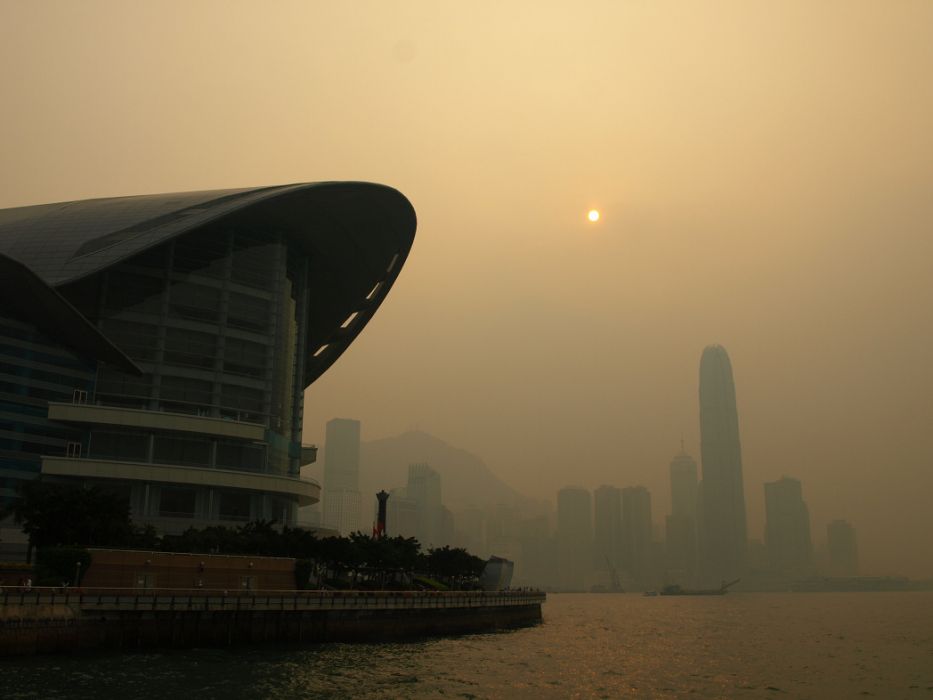

Environmentalists are putting pressure on the Hong Kong government to crack down on air pollutants, after they learnt that the city has seen a bigger rise in poisonous ozone pollution than even the industrial mainland province of Guangdong.
The Environmental Protection Department blamed the rise on more easterly prevailing winds from the mainland; but Clean Air Network emphasised that local factors have contributed too, according to the SCMP.
Having studied data on ozone levels from the Guangdong-Hong Kong-Macau air quality monitoring database, campaigners from the Clean Air Network found that Hong Kong saw a 9.2 percent increase in ozone level recordings between 2010 and 2014, compared to the 6.1 percent increase recorded in Guangdong.
When the group studied data from local general air quality monitoring stations, excluding three that were included in a regional monitoring scheme, they found the rise in the level of ozone was even greater, at just over 17 percent.
Moreover, local stations recorded a shocking 27.2 percent increase in ozone between 2006 and 2014, compared to “just” 19.5 percent in the neighbouring province.
Kwong Sum-yin, chief executive officer of the Clean Air Network, indicated that the increase in the number of vehicles on Hong Kong roads over the past decade is partly to blame for the noticeable deterioration of air quality.
Between 2005 and 2014, the number of vehicles driving through the three cross-harbour tunnels per day has increased from 228,000 to over 250,000. Environmentalists have therefore urged the government to introduce transport planning measures to lessen pollution.
Hong Kong and Guangdong have established joint emissions reduction targets, which incorporate two main sources of ozone production. However, the group has pressured authorities to include actual targets on ozone.
Kwong emphasised the health risks that air pollution carries.
According to the Hedley index, which was developed by the University of Hong Kong’s public health school to demonstrate the public health costs and risks from pollution, just over 2,000 people died last year from air pollution, costing HKD27 billion to public health.










