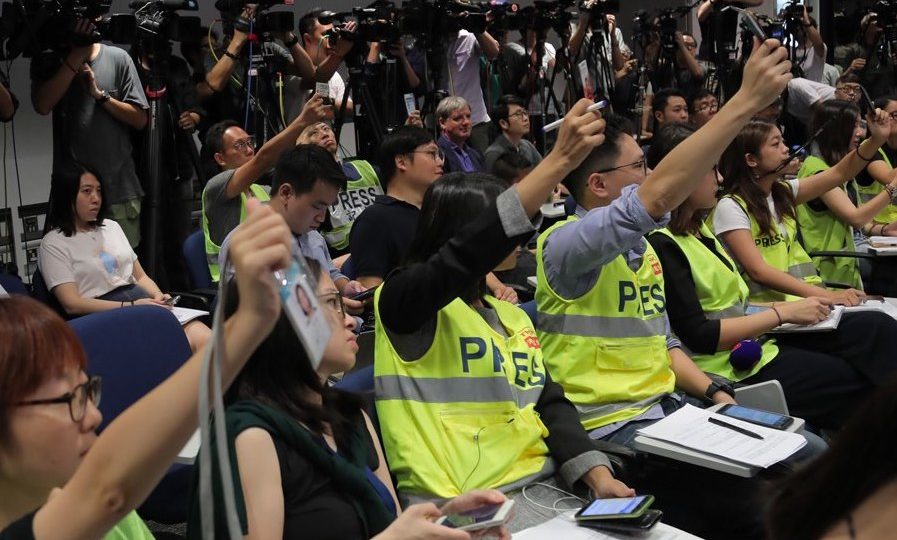

Frontline reporters who covered last year’s protests in Hong Kong suffered a host of health and psychological impacts due to the use of tear gas and other crowd control weapons, a survey has found.
The study was presented virtually at the Annual Conference of International Society for Environmental Epidemiology this week.
230 reporters were recruited for the study from October to November 2019. Two-thirds said that they were exposed to crowd control weapons—including pepper spray, water canon, baton, baton and kinetic impact projectiles such as rubber bullets and bean bag rounds—at least once a week since the protests began in June.
Over a quarter of the respondents said they experienced symptoms including cough, pain in eyes, skin irritation and diarrhoea, despite the fact that majority were equipped with protective gear including respirators and helmets. More than 5% indicated symptoms of vomit and coughing up blood.
The study was conducted by researchers in Hong Kong and the UK who work in the fields of public health, epidemiology and respiratory medicine—among them David Hui, a respiratory diseases expert from the Chinese University of Hong Kong who is currently advising the city’s COVID-19 response.
Thousands of rounds of tear gas were fired during protests last year, sparking public health anxiety about the physical effects of the riot control agent being used weekend after weekend in the densely populated city. During the most heated months of demonstrations, police used tear gas to disperse protesters almost every Saturday and Sunday, and sometimes on weekday nights.
But authorities brushed off the concerns raised by lawmakers and medical professionals, and declined requests to disclose the chemical make-up of the tear gas that was being used.
Read more: Disperse, Or We Grill Beef: Gov’t official says smoke from barbecue worse than tear gas
One key message of the research was the high proportion of reporters—60% to 70%—who said they suffered from “mild to severe depression and anxiety.”
Reporters on the frontlines, especially those who may be live-streaming on social media, are often first-hand witnesses to bloody confrontations between protesters and police officers. On a few occasions, officers have even fired live ammunition and left protesters in critical condition.
Police have also appeared to deliberately target reporters by unleashing pepper spray at camera lens and firing a water cannon at them when there are no protests in sight. Rights groups, including the Hong Kong Journalists Association, have condemned the police’s use of force and accused officers of obstructing reporting.