

The case of the 29-year-old Cambridge-educated, British expatriate banker Rurik Jutting, charged with the double murder of two Indonesian woman inside his Wan Chai flat, has arguably attained almost as much global media play as the Umbrella Movement.
The epithet “FILTH” (Failed in London, Try Hong Kong), a term used to slag off individuals who left London (or, “The City”) after the 1997 handover in order to make their fortune in Asia’s financial hub, has once again captured the imagination of Daily Mail readers.
Historic parodying of Hong Kong’s expat community “behaving badly” is nothing new, particularly when it is attributed to those who hail from Great Britain. Unsurprising then, it was about time that they received another good old fashioned skewering. Though not limited to, nor by, their point of origin.
Charley Lanyon’s piece for VICE entitled “I Ate Steak at an Underground Fight Club with Hong Kong’s Elite” is a histrionic (albeit very, very entertaining) account of his attendance at “Fight Club” in the company of those he refers to simply as “Westerners”. The event was curated and hosted by The Butchers Club, a “Steakhouse, Caterer and Butcher” (according to their official Facebook page).

The official Fight Club poster
Founded by (expats) Jonathan Glover, Aarik Persaud, Nick Ratzlaff, Ned Nolan and Andy Young, the Butchers Club also operates a popular and acclaimed burger joint in Wan Chai and a deli and a shop in Wong Chuk Hang, and usually only enjoys excellent press.
Lanyon’s sensational piece was a retelling of his attendance at a male only, black-tie affair which set guests back a whopping HK$30,000. The “Fight Club” included a three-course meal, dancing girls, a boxing match and what appeared to be an unquantifiable amount of meat and liquor (naturally).
But Lanyon’s article alleges more than just meat and choreographed bloodshed: racist slurs and misogynistic behaviour also (allegedly) took centre neon-lit stage that night.
On Tuesday I was asked to discuss Lanyon’s damning piece on RTHK’s morning show “Backchat”. Undoubtedly my presence was requested because I am the author of FILTH, a stage play which premiered in March during the 42nd HK Arts Festival and at the Soho Theatre in London this October – thus rendering me an “expert” on such matters, or the victim of merciless trolling. You decide.
But was “Fight Club” a prime example of the increase in “expats behaving badly” in Hong Kong, or simply a semi-debauched night out for chauvinistic males with lots and lots of money? White, or not, we can’t confirm that these men were “Hong Kong’s elite” as the title of the piece infers. They may, indeed, have simply been those who believed an evening away from responsibility (and the prying eyes of women) would be great night out.
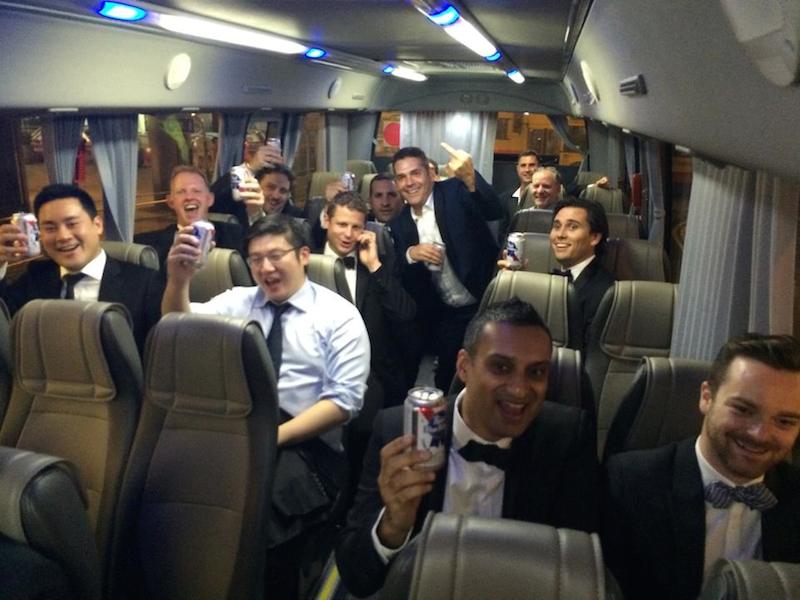
The radio discussion, which included the founder of hotel bar Lion Rock and an ex-banker (both educated at international schools in Hong Kong), was seemingly propelled by the left-field argument that bad behaviour is becoming a widespread problem among “young, rich, white males” in Hong Kong.
One argument given for the rationale behind such behaviour footholds the David Thoreau theory: that the “quiet desperation” and “loneliness” of being far away from home with no roots or solid family structure as what innately drives him (the expat) to act out.
Dr Cathy Tsang-Feign, an expert in expatriate psychology and adjustment, suggests “expatriates suffer from a high number of extra-marital affairs”, and that this is a “well-known maxim in any expatriate community”.
Lanyon’s piece not only highlights Hong Kong’s reputation as a transient, money-centric city, it also emphasises its outdated cultural attitudes about the relationship between men and women and frankly, the fact we are still decades behind.
Lanyon is unable to comment publicly or defend his piece due to contractual obligations. However, it is quite clear that The Butchers Club, who issued a rebuttal to Lanyon’s piece via Facebook, did not read the article too carefully.
For unlike their claim of his piece mentioning the blatant display of “nudity and drugs”, he incidentally only referred to the burlesque dancers as, well, “strippers”, and as for the drugs, he simply claimed a boxer handed him a “48-hour boner pill” as a keepsake. He did not suggest anyone was soliciting narcotics of any kind.

The Butchers Club’s Facebook rebuttal also contained an odd statement regarding its male-only invitation: “The event was made public and open to all men, not because we wanted to discriminate against women, but because we understand that our brand is often seen as being male-centric. We thought it would be fitting to utilise this fact to create something a bit different, in the same way as we also arrange family-friendly events as well as events more suited to women.”
Lanyon’s provocative assertions of the night in his VICE piece aside, this declaration of not to “discriminate against women” because their brand is “seen as being male-centric” is troubling, if not, extremely confusing. For surely women like all-you-can-eat steak and boxing too?
The Butchers Club did not reply to my request for comment.
So, is the expat’s new environment of Hong Kong conducive to such behaviour? Is this city in particular as extraordinary as Lanyon’s piece and decades of generalisations of expats in Hong Kong suggest? Or is there a far more grave underlying issue here: that of indifference to it.