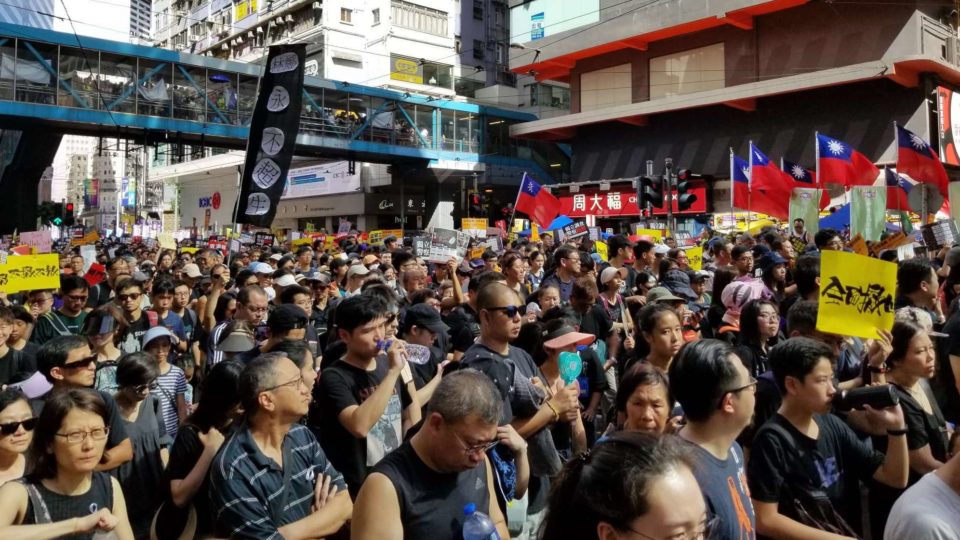

Yet again, Chief Executive Carrie Lam’s efforts at appeasement appear to have failed, with opponents of a controversial extradition bill threatening still more mass demonstrations despite Lam’s assertion this morning that the “bill is dead.”
The comments were Lam’s latest attempt to mollify protesters, who for weeks have taken to the streets in huge numbers, with some more hardcore elements undertaking civil disobedience actions and clashing with police. A press conference following a chaotic rally on June 12 in which Lam said the bill was “paused,” only served to stoke public anger further, with even more people returning to the streets days later calling for a complete withdrawal of the legislation.
Despite, Lam’s assertion today that there “is no such plan” to renew work on the controversial bill, she again refused to buckle to demands to completely withdraw it from the legislative agenda, provoking outcry from the anti-government camp.
Prominent pro-democracy activist Joshua Wong today called Lam’s words “another ridiculous lie.”
“The bill still exists in the ‘legislative programme’ until July next year,” he said in a tweet.
The Civil Human Rights Front — which has organized some of the mass rallies — said it would announce fresh protests in the coming days.
Other smaller groups have also called for protests outside of the central business and shopping districts of Hong Kong Island after an anti-extradition rally was held in Kowloon for the first time on Sunday. Online activists have also floated the idea of withdrawing funds en masse from the Bank of China — a kind of “stress test” — to keep up pressure on the government over the bill.
Thanks in part to the government’s — and Lam’s — perceived intransigence, the protests have morphed into a wider movement calling for democratic reforms and a halt to sliding freedoms in the city. Analyst Dixon Sing, meanwhile, said Lam’s remarks would do little to defang the protest movement.
“Trust in the government has sunk to such a record level that if there’s not a clear fulfillment of the [key] demands, the majority of the Hong Kong public will still be very skeptical of the government’s sincerity,” he said.
In addition to withdrawing the bill, Lam has also been under pressure to create a public commission of inquiry into the police response to the protests. But she rejected those calls again today, backing an existing police complaints body to investigate claims of excessive force.
The anti-extradition movement has united an unlikely cross-section of society, including major businesses, legal bodies, religious leaders, activists, journalists, and everyday Hongkongers.
Beijing has thrown its full support behind Lam, calling on police to pursue anyone involved in the recent storming and vandalism of the parliament building and other clashes.
Over the weekend China’s ambassador to London said the extradition bill was needed to “plug loopholes,” fueling fears Beijing still wants the legislation to pass.