

Police arrested 267 people over the weekend in a sprawling anti-triad operation aimed at illegal gambling dens.
At a press conference yesterday, police Superintendent Eileen Chung Lai-yee from the Organized Crime and Triad Bureau said the arrests were part of an undercover operation codenamed “Wisebold,” and came about following a tip-off that triad gangs were operating illegal gambling dens and “drug canteens” — where people package, distribute, and sell drugs — in parts of West Kowloon and New Territories North.
On Saturday evening, some 700 officers — from the anti-triad unit, the narcotics bureau, the commercial crime branch, the tactical unit, and the Immigration Department — raided more than 44 locations in Kowloon and the New Territories, including 12 licensed arcades and 26 unlicensed casinos.
Officers arrested 267 people — 221 men and 46 women aged 16 to 76 years old — over two days. Some of the suspects had a triad background, and police have not ruled out further arrests.
Chung told reporters that 80 of the suspects were non-Chinese nationals who came from Nepal, India, Pakistan, Bangladesh, the Philippines, Vietnam, Indonesia, Portugal, and Egypt.
The suspects included customers and arcade staff, and all are being held on suspicion of at least 300 counts of criminal activity, including gambling, drug trafficking, conspiracy to smuggle drugs, and claiming to be a triad member, among other potential charges, on.cc reports.
Police also seized more than 440 games including arcade games, slot machines, roulette wheels, and machines and cards used to track gamblers ” game points,” which could be redeemed for cash. Authorities also seized HK$900,000 (about US$115,000) in cash and HK$150,000 (about US$19,100) worth of drugs, including ice, cocaine, and marijuana, as well as related paraphernalia.
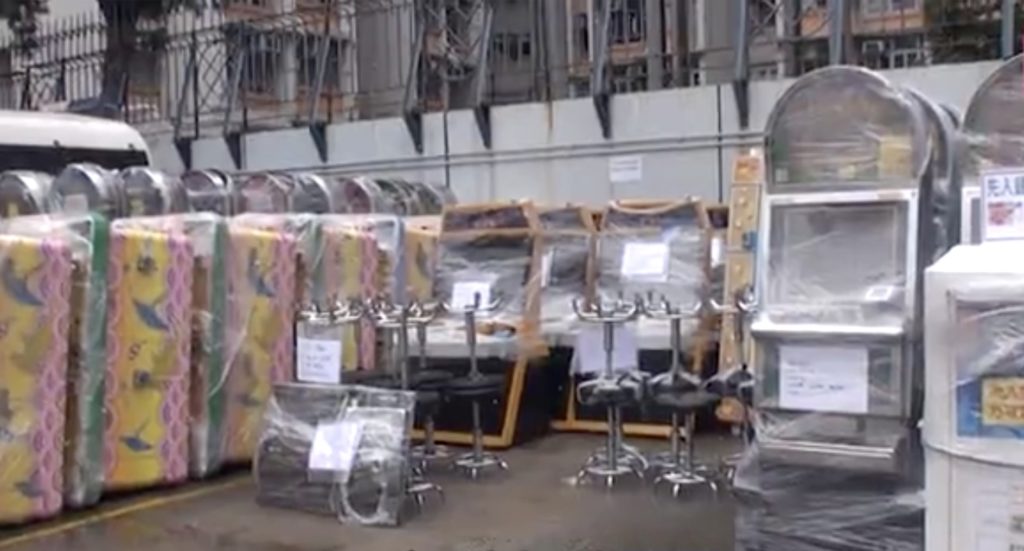
Chung’s colleague, Chief Inspector Tse Tsz-kwan, explained to reporters that triad gangs would sometimes cooperate with the owners of licensed arcade game centers (AGCs), who in turn “recruit” gamblers by encouraging customers to buy “game points.”
“Basically these syndicates will have some technicians, they will go to adjust the setting and the difficulty of those game machines so that sometimes they will set it at an easier level to attract those customers, and sometimes when more customers play that machine, they will adjust the difficulty to a higher level so that they will lose all of their money, and also sometimes they will provide some discount to attract those customers from other AGCs.”
Tse said that these arcades also had “game point redemption agents” who were responsible for soliciting customers to buy game points from them in exchange for money. The agents earned “about a 10 to 20 percent commission each time for each exchange.”
Tse added that around midnight — closing time for many of the arcade gaming centers — staff would pull down the outer shutters and encourage some of their customers to continue gambling in unlicensed casinos upstairs, where they would also sell drugs.
Although locals and non-locals alike were arrested, Tse said the operations were specifically targeting foreign recognizance form holders. Recognizance forms, also referred to in Hong Kong as “going-out passes,” are temporary identification documents issued by the Immigration Department — often to asylum seekers — that allow the holder to stay in Hong Kong but prohibit them from working.
Police said the point redemption agents targeted non-locals and arcade regulars, as opposed to new customers, in order to avoid arousing suspicion.
Authorities said the group has been operating for more than half a year, and that the monthly profits from a single gambling machine could range from HK$500,000 to HK$1 million (about US$63,700 to US$127,000). Officers maintained that although members of staff were aware that what they were doing breached the Amusement Game Centres Ordinance, they continued to solicit customers because of the lucrative profits.