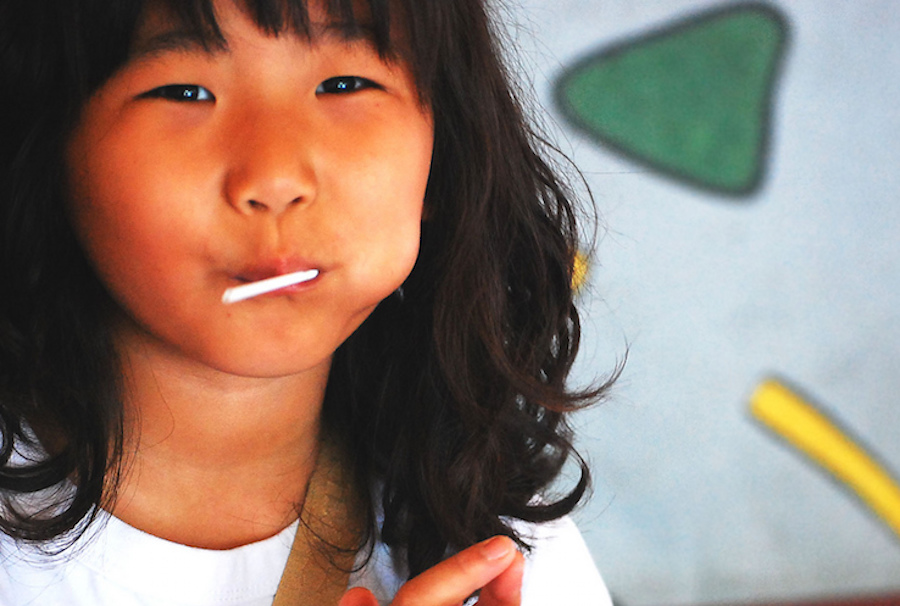

A whopping two out of five kindergarten children in Hong Kong have tooth decay, showing that the city lags behind the rest of the developed world in dental hygiene, reveals a study by HKU’s faculty of dentistry.
In the 2014-2015 academic year, HKU conducted dental checks on almost 23,000 kindergarten children, finding that almost 40 percent had dental cavities, averaging 1.5 decayed teeth per kid.
What is Hong Kong feeding their children?! Acid lollipops and sugar pancakes?!
The Sham Shui Po, Wong Tai Sin and Northern districts had the worst tooth decay in children, while kids in the Kowloon City and Tsuen Wan districts had the least rotting teeth.
The bad news is that the results are good news, because both the average prevalence rate and the mean number of decayed teeth per child have shown a slight drop compared to the last two years’ studies.
For the 2012-2013 academic year, the prevalence rate was 44 percent, with 1.6 decayed teeth per child on average.
In the US, 23 percent of children between the ages of 2 and 5 have tooth decay. In the UK, 28 percent of five-year-olds have cavities, while only 18 percent of Japanese three-year-olds have rotting teeth.
“It shows that many parents do not pay sufficient attention to the dental condition of their kids, and small children are rarely taken to dentists for dental check or treatments”, said Edward Lo, the chair professor in dental public health for HKU’s faculty of dentistry.
“Some parents may have the misconception that primary teeth with dental caries need no treatment as they will soon fall off to be replaced by permanent teeth.”
However, untreated tooth decay can lead to an infection, and in rare, serious cases, even death, Lo continued.
A separate HKU study found that silver diamine fluoride, a treatment pioneered by their dentistry faculty, was successful in stopping the worsening of existing tooth decay. (Side effect: it stains your teeth.)
“It is important that tooth decay in young children should be diagnosed and treated early because advanced decay will progress into the tooth pulp, leading to toothache, abscess and loss of tooth,” said Chun-hung Chu, an associate professor at HKU.
Let’s hope you never have to use the treatment, which you can hopefully avoid by brushing your teeth twice a day and having a healthy diet that involves less snacking and less sugar (A.K.A. being an actual adult).
Photo: Kathy Ponce via Flickr