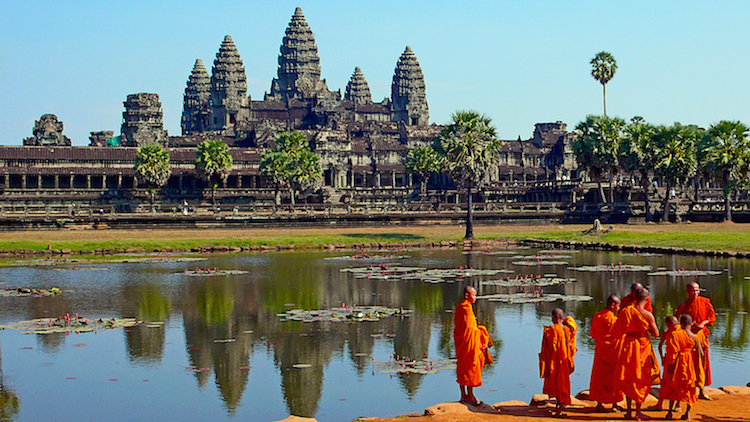

Everyone’s heard of the ancient temple ruins in Siem Reap, Cambodia. And everyone’s been told they are truly spectacular, and that you simply must visit. But it’s difficult to comprehend the truth of these words until you behold the Angkor Wat first hand.
The sprawling yet serene site in the middle of the forest is a maze of hundreds of worn-down deities, crumbling temples and massive trees that have overpowered what remains of the ancient Angkorian civilization. It’s an experience so awe-inspiring that words don’t do it justice.
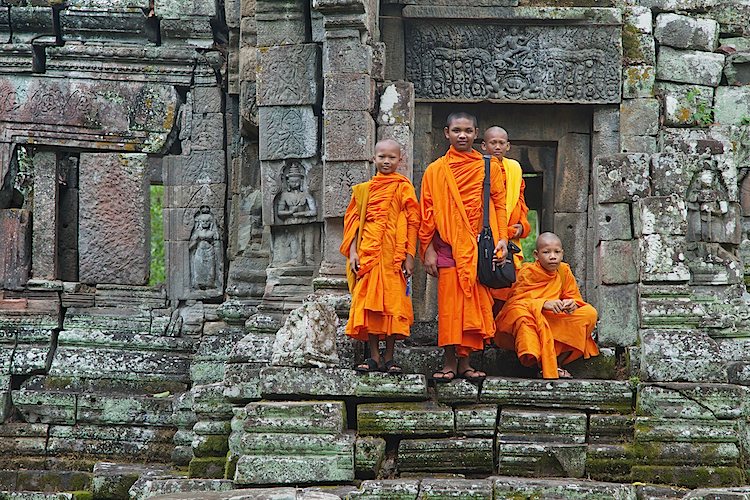
The all-access nature of the UNESCO World Heritage Site allows multiple options for getting up close and personal with the historic artefacts. The site is just a few kilometres from the centre of Siem Reap, and once you’ve paid the USD20 (HKD155) daily entry fee, you’re free to roam the entire area.
Here, we bring you five of the best ways to take it all in.
On foot: with a personal trainer or professional photographer
The site is too large to traverse entirely on foot, but its different parts are perfect for a morning jog or a site-specific photography stint. The tall trees provide plenty of shade, while the surrounding centuries-old architecture supplies additional stimulus for invigorating both mind and body.
Nearby resorts conduct organised exercise activities. Belmond La Residence D’Angkor, for example, hosts a week-long fitness itinerary (USD2,895/ HKD22,448) in the lead up to the Angkor Wat International Half Marathon, which takes place in December each year. Alternatively, get a group together and break out your aerobics routine in an appropriately even and shaded spot among the ruins.
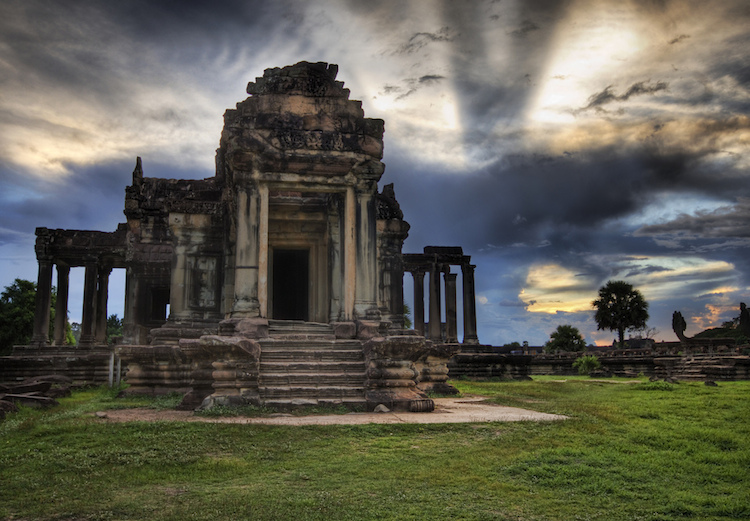
The derelict remains of Cambodia’s ancient kingdom are visually intriguing on many levels. Their symbolic decay, the way they have integrated with nature, and the shadows cast by the trees and temples all make excellent subjects for stunning photography. Professional photographers can tailor tours to your preferences, as well as guide you to the top snapping spots and teach you how to navigate the myriad of settings on your SLR. Angkor Wat Photography comes highly recommended.
On two wheels: bicycle or cyclo
Many resorts have bicycles available for guest use, and there is also number of small bike rental business in Siem Reap. This is certainly a budget-friendly option, with a day’s bicycle rental costing about USD10 (HKD77). The Angkor Wat complex is within cycling distance from the city. You would probably need two or three days to cover the entire site though.
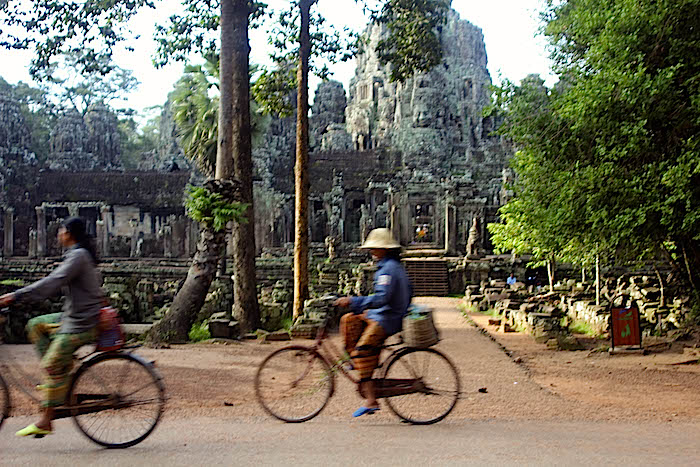
Within the complex is a number of “cyclo” (Cambodia’s version of a rickshaw) and tuk tuk drivers eager to take you around for as little as USD5-10 (HKD38-77). This is a pleasant and very popular way to experience the temple ruins, and you get an unofficial tour guide, to boot.
By air: hot air balloon or helicopter
Having a bird’s eye perspective of the Angkorian ruins helps illustrate the layout and scale of the civilization, and how it functioned. It also allows for an intimate experience, separated from other visitors. Although the airspace directly above the UNESCO Heritage Site is off-limits, hidden ancient remains are dotted around the surrounding forest, making for great “off-the-beaten-track” discoveries.
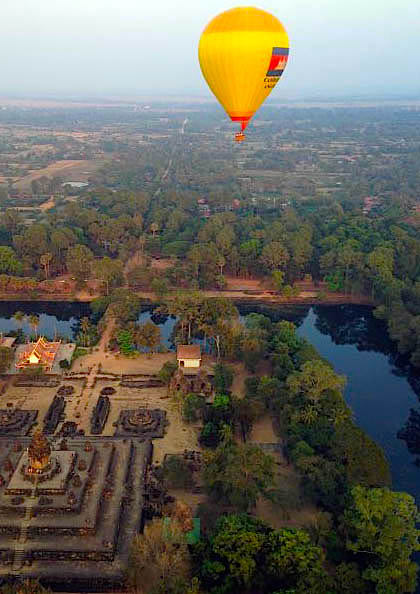
Cambodia Flight Holiday International Travel offers 40-minute hot air balloon rides over remote temples at sunrise and sunset for USD125 (HKD969) per person. They only operate during hot season, between November and April.
Helicopters Cambodia, meanwhile, provide a number of route options featuring scenic panoramas and picnic drop-offs. The “Lost Jungle Temple” tour, for example, includes stops at Banteay Chmar, Koh Ker and Ben Mealea – charming monuments hidden from the world, and the perfect place for an alfresco lunch. A ride that includes 40 minutes flying time and one landing of an hour-and-a-half costs about USD2,100 (HKD16,283).
Being still: yoga and meditation
Visiting Angkor Wat and the surrounding ruins can be an overwhelming experience. It’s almost unbelievably beautiful, and trying to comprehend the centuries of history can be mind boggling. However, there’s no shortage of serene spots that feature the perfect balance of nature and spirituality, ideal for any master or amateur yogi.
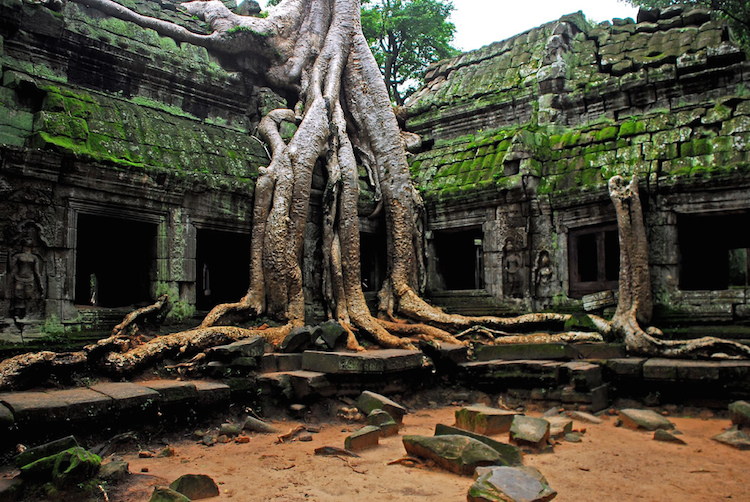
Take a moment to sit comfortably and meditate, or conduct some simple yoga salutations. Alternatively, you could join an organised session. The Amansara spa has “cultural offerings” on its menu that include 60 minutes of yoga and meditation at the temples for USD220 (HKD1,706) for two.
By car
A very comfortable – and probably the most efficient – way to get round the ruins is by taxi. You can hire a private car and personal driver for about USD30 (HKD233) a day, which comes with the benefit of being able to set your own pace and schedule an itinerary, as well as providing an air-conditioned cabin for recuperation between the temple exploration excursions. This method also allows you to cover all the main areas of the site in a day, and can prompt insider tips from your driver on lesser-known sites and when to visit.