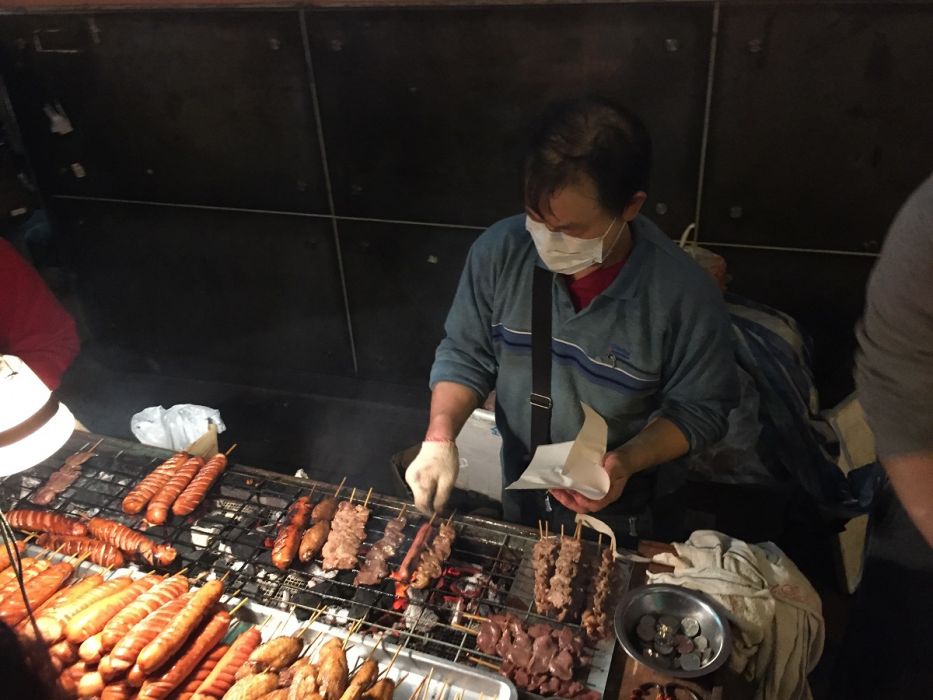

Hong Kong’s start to the Lunar New Year has been rocked by one of the most violent examples of civil unrest in recent history. What started from a conflict on the clearing of unlicensed street hawkers resulted in nearly 90 police officers being injured, more than 60 arrests, and two fired bullets during the early hours of the new year.
That evening, we ventured down to the scene of the Fishball Revolution to gauge the immediate aftermath of what has been called the worst violence since 2014’s Occupy Movement. The streets of Mong Kok were as busy with as usual, with the hawkers whom FEHD had attempted to clear by force operating as if nothing had happened. People continued to flock to the stalls, as they do every year, yet the heavy police presence reminded pedestrians of the drama that occurred the night before.
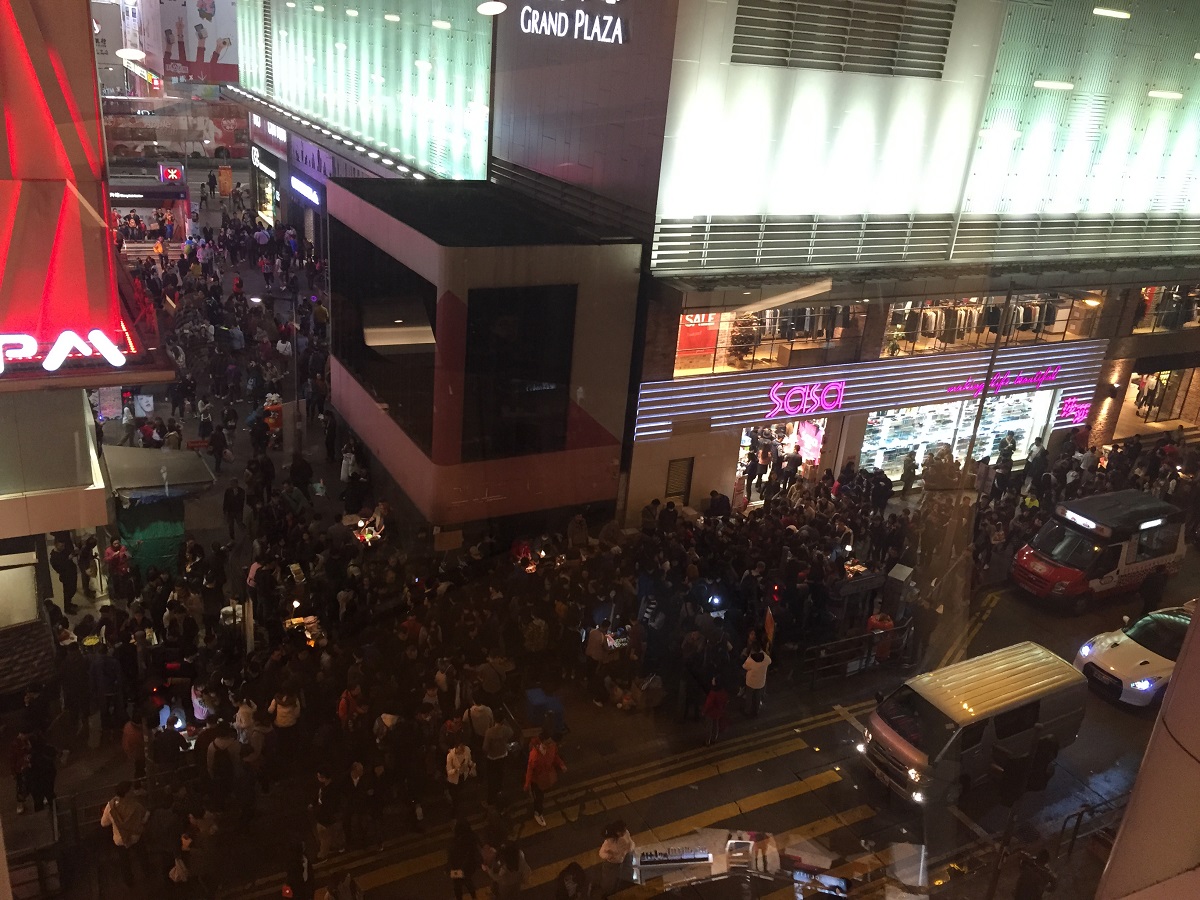
Business as usual in Mong Kok, as seen from above. Photo: Thomas Chan/Coconuts Media
Despite skewers of bouncy fishballs being peddled to revellers as usual, the riot they have since become synonymous with continued to be a centrepiece of fiery debates on social media and within the community.
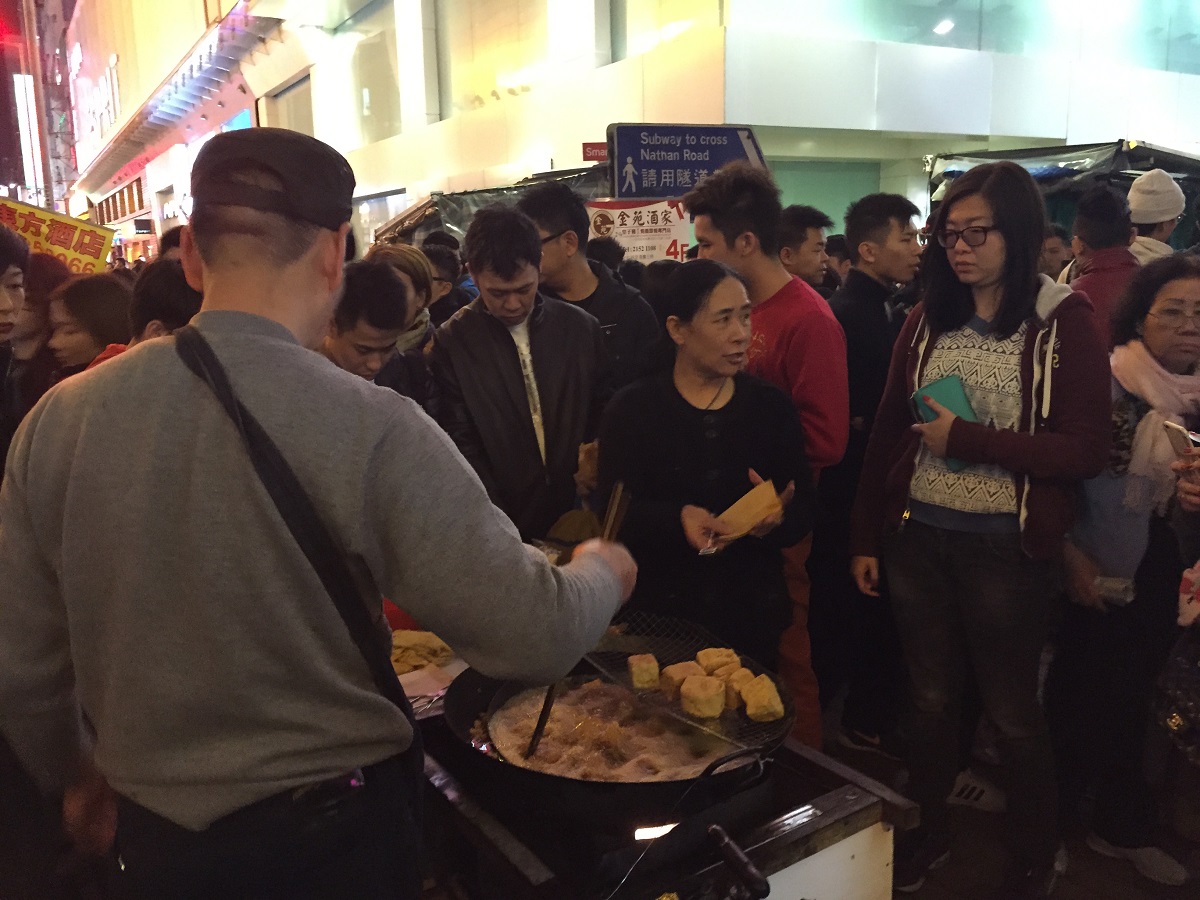
Hongkongers patronise a street hawker in Mong Kok mere hours after the Fishball Revolution
Many of those who sympathised with protesters linked the incident with a series of events and controversies that Hong Kong has endured since CY Leung’s inauguration in 2012.
Controversial infrastructural projects like the Hong Kong International Airport’s third runway, cases of police brutality and alleged double standards during and after the Occupy Movement, unpopular governmental decisions like the broadcast licensing or the pro-Beijing education syllabus, skyrocketing living expenses, and a dysfunctional legislative body were all cited as influential factors.
Other protesters have reportedly expressed their opinion that the 79-day Occupy Movement was a failure, and therefore favoured direct confrontation against the authorities.
During arguments, followers of the Fishball Revolution often label opponents as “Hong Kong pigs” (港豬, a derogatory term for socially-unaware citizens). Those who insisted on neutrality or considered both protesters and police equally culpable were also criticised.
These sentiments have since cropped up in a spate of articles, artworks and memes on social media:
On the other hand, pro-government bodies and individuals have condemned violent acts by protesters and focused on maintaining the status quo. Participants in the Mong Kok riots have been labelled “mobsters”, “rubbish youth” (廢青: an insulting term for underprivileged or politically-active youngsters), and “radical separatists”.
Pro-government netizens or social media channels generally call for harsh treatment on protesters involved and welcome brutal responses from the police and the law. Some even criticise the judiciary for previously handing out “lenient” sentences on Occupy protesters, which they argue became an incentive for youth to take to the streets.
Up to now, the social media atmosphere is extremely divided, and judging from the government’s hardball response, there will be no sign of any reconciliation soon.
Got a tip? Send it to us at hongkong@coconuts.co