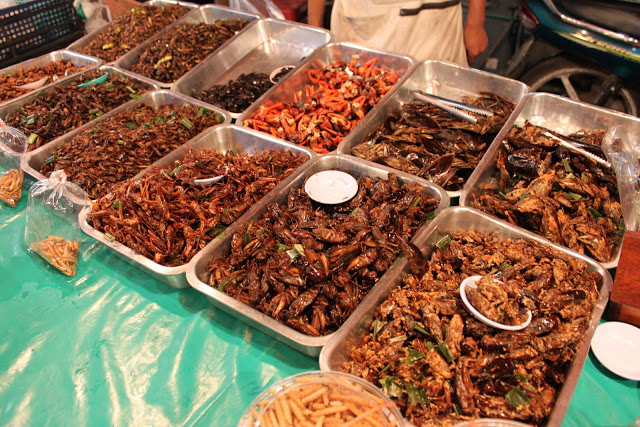

A recent report from the United Nations Food and Agricultural Organization (FAO) has concluded that a possible solution to the world’s looming food shortages (gulp), resides in the craft of Thai cricket farmers.
This report (hat tip to the Financial Times) outlines how crickets and other edible insects provide a healthy form of protein for Thai consumers and a mild economic boost for the country’s less-than-dynamic rural areas.
The UN speculates that this same model can be adopted by other countries, and expanded to an industrial scale.
And such a boost is sorely needed. According this same FAO report, the world’s demand for food will rise a whopping 60% between the present and 2050. Insect farming allows not only for an increase in the world’s food supply, it also produces far less carbon than traditional beef farming, a practice responsible for 18% of the world’s overall greenhouse gas emissions.
At present, Thailand produces 7,500 tons of insects each year. Little of this crop reaches the international market, as health standards and long-simmering distaste have kept developed countries from making the plunge into eating insects on a regular basis.