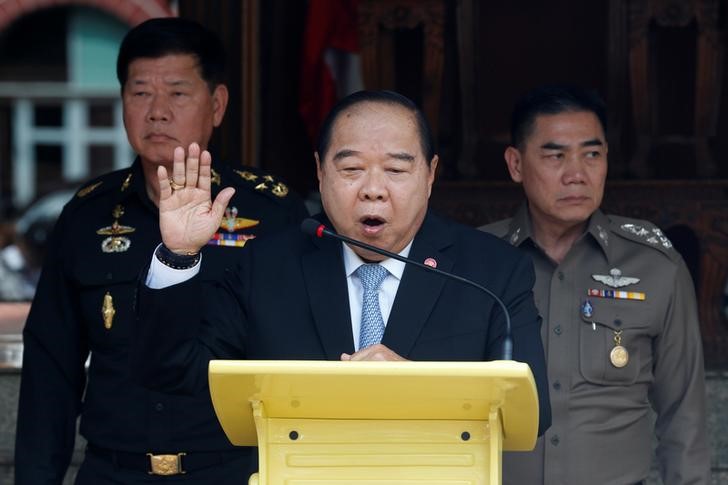

Thailand’s military government said yesterday that peace talks with Muslim separatists operating in the far south of the country would resume in Malaysia, but no agreement would be signed unless the insurgents observed a ceasefire.
The separatists from the far-south Muslim-majority provinces of Yala, Pattani and Narathiwat have been blamed for an unprecedented string of bombings last month in several tourist towns that killed four people and wounded dozens.
A decades-old insurgency in the deep south of predominantly Buddhist Thailand flared in 2004 and more than 6,500 people have been killed since then, according to the independent monitoring group Deep South Watch.
Talks between the government and insurgents began in 2013 under the civilian government of Prime Minister Yingluck Shinawatra but have stalled since the military overthrew her government in 2014.
Defense Minister Prawit Wongsuwan said negotiations would restart on Friday in Kuala Lumpur, the capital of Malaysia. That country has been trying to broker negotiations.
General Aksara Kerdphol, the Thai government’s lead negotiator, said the rebels had to show good faith by ending violence.
“I have been instructed to tell the groups that there must be a peaceful situation on the ground before we are willing to sign any document,” he said.
Malaysia’s Bernama state news agency said Thai officials would meet representatives of the MARA Pattani “separatist umbrella group.”
Bangkok-based analyst Anthony Davis, at security consulting firm IHS-Jane’s, said a ceasefire was unlikely as the main group behind the violence, Barisan Revolusi Nasional (BRN), had been left out of the talks.
“BRN has made it entirely clear that they reject the current process of peace talks between Bangkok and the group of small factions-in-exile in Malaysia called MARA Pattani,” he said.
The three ethnic-Malay majority provinces were part of a Malay Sultanate before being annexed by Thailand more than a century ago.
The Aug. 11-12 bombings in several towns including Hua Hin, Surat Thani and Phuket spread alarm in a tourist industry that had been largely spared a spillover of violence from the insurgency.
Authorities at first dismissed any connection between the bombings and the separatists, instead blaming the military government’s mainstream political opponents.
The attacks came days after voters approved a military-drafted constitution in a national referendum. The charter was roundly opposed in the far south.