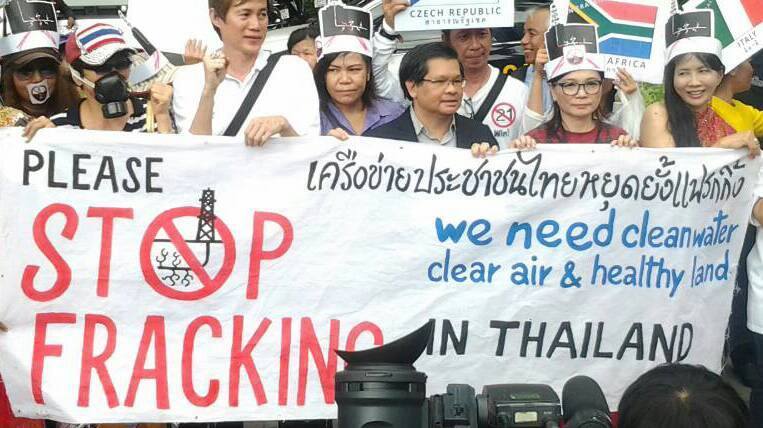

A coalition of environmental advocates gathered outside the U.S. Embassy yesterday to protest the use of hydraulic fracturing in Thailand’s northeast.
Embassy officials received a letter from the group, which consisted of about 20 academics and environmentalists, demanding two U.S. firms stop using “fracking” methods to pull gas from underground deposits in the northeast.
They called out U.S. petrochemical multinational Chevron along Apico, a U.S.-based firm whose sole mission is to exploit Thai gas deposits through its concessions. The “Stop Fracking Thailand” group also called on the US Congress to investigate their actions.
Thailand’s Energy Ministry has assured there is no possible danger or health threat to fracking, according to Bangkok Post.
As a cheap means of accessing gas deposits, fracking has created a new boom in energy extraction that’s been a god-send to corporate profitability, while communities in the United States and elsewhere have been devastated by pollution from the effects. Community and environmental activists there have made little headway against the practice by the industry, which has spent heavily to defend it from legal or policy challenges.
Its defenders insist “the jury is still out” on its adverse effects.
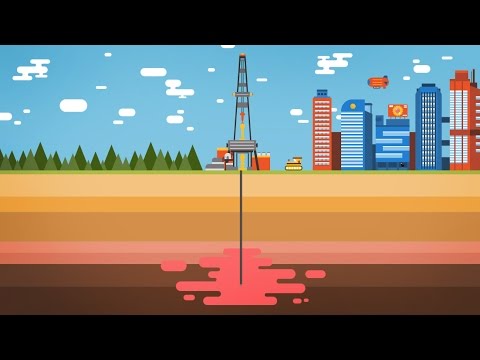
Here’s an attempt at a “fair and balanced” look at fracking: