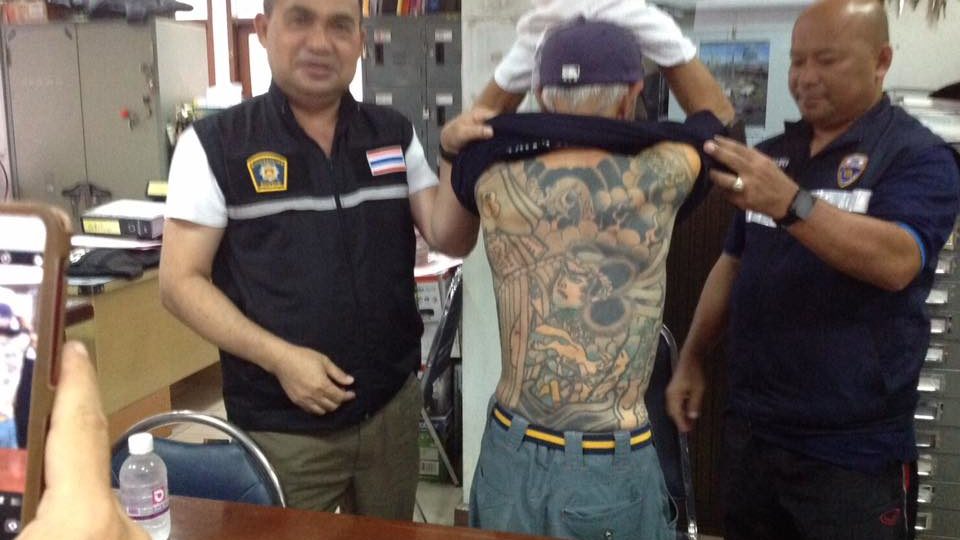

Police are investigating whether Shigeharu Shirai, an alleged fugitive yakuza member wanted for the murder of a rival gang member more than a decade ago, has committed crimes in Thailand, before the 74-year-old suspect will be extradited to Japan.
Shirai, an alleged senior member of the Yakuza sub-gang Kodokai, was arrested Wednesday in rural Lopburi province, where he had been hiding since he entered Thailand in May of 2005.
Shirai stands accused of shooting dead rival member Kazuhiko Otobe in Mie Prefecture in 2003. For the murder, seven other accomplices, who were also allegedly members of his gang, were caught and imprisoned for between 12 and 17 years each, reported AFP and Japan Today.
READ: Viral tattoo photos lead Thai police to arrest fugitive yakuza after 15 years in hiding
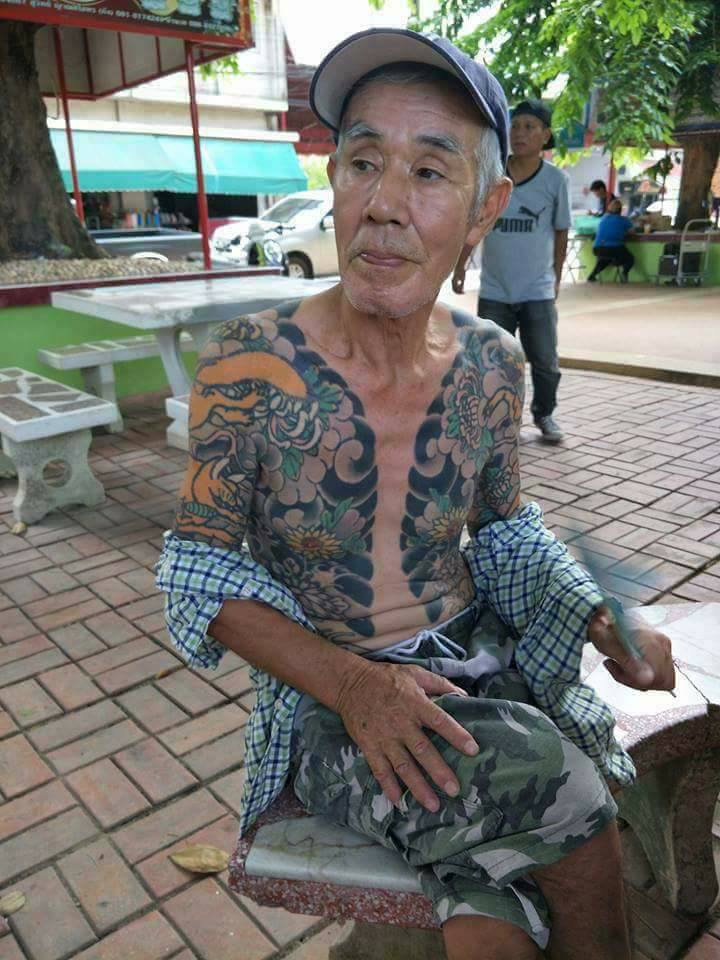
“The suspect has not confessed to murder but has admitted that the victim used to bully him,” police spokesman Gen. Wirachai Songmetta said.
The alleged yakuza member appears to have kept a low profile during his stay in Thailand, police said, receiving about THB10,000 cash (US$313) two or three times each year from a visiting Japanese man. He reportedly had a Thai wife, only identified as “Arisara,” before separating with her after frequent quarrels. Police are tracking down the Lopburi woman.
Shirai reportedly worked general labor jobs for a living, such as painting houses and moving rice sacks. He lived at employee housing for a rice mill in Muang district for more than one year before moving out.
The owner of the rice mill, 54-year-old Thawatchai Senakhom, has been charged for employing an illegal foreign worker.
“I personally did not know Shigeharu was a boss of a yakuza gang. When I asked about his tattoos and the missing pinky finger, he told me that he got his finger cut off because he made a mistake,” Thawatchai told Khaosod.
“While he was living with me, a fat, short Japanese man visited him once or twice. There was also a Thai who used to work in Japan visiting him. They drove out on a motorbike together,” he added.
Before he was arrested, Shirai took shelter at a park near a Chinese shrine in Thahin sub-district, where he helped clean in exchange for small wages.
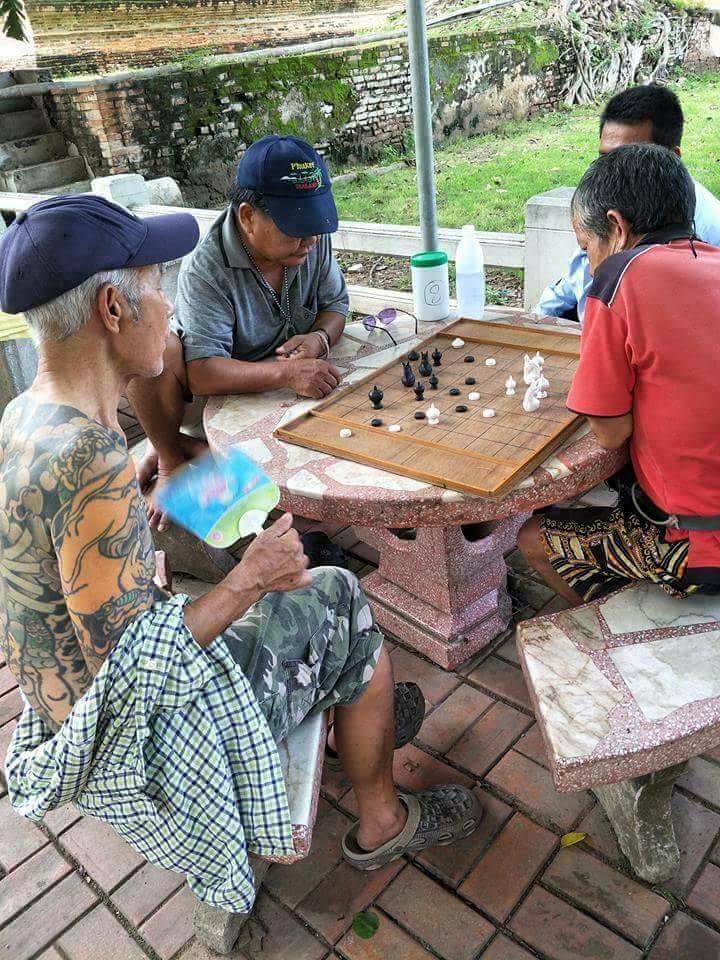
Kritsada Pukhiran, an attendee at the shrine, described Shirai as “nice and lovable,” adding everybody “loved” the Japanese man and was shocked to find out he was in a criminal gang.
Kritsada told Matichon that Shirai also was popular among the teenagers in the area who liked his tattoos, which ironically led to his arrest.
The yakuza is an organized crime group that emerged in the chaos of post-war Japan turning into a multi-billion-dollar criminal association involved in gambling, drugs, prostitution, loan sharking, protection rackets, and white-collar crime, AFP reported.
They were long tolerated in Japan as a necessary evil to keep order on the streets and get things done quickly — however dubious the means.
Unlike the Italian Mafia or Chinese triads, yakuza are not illegal and each group has its own headquarters in full view of police.
Around 70,000 Japanese live in Thailand and Japan is the country’s biggest investor, largely in the automobile and electronics sectors.
In 2017, Japanese spent more than $US4 billion (THB127 billion) in Thailand, nearly half of all foreign direct investment.