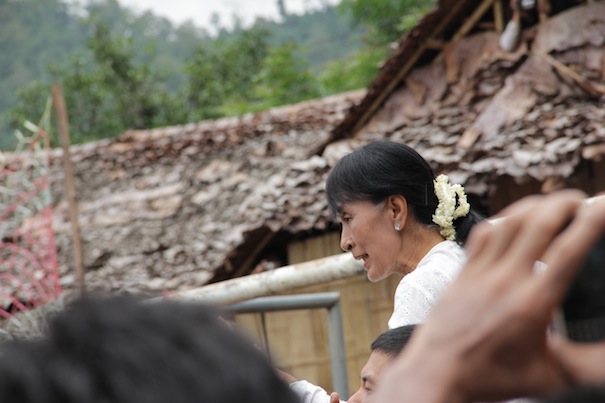

Burmese opposition leader Aung San Suu Kyi’s presence at the World Economic Forum (WEF) East Asia in Bangkok last week – her first trip abroad in 24 years – overshadowed the event and appears to have strained her relations with president Thein Sein.
There has been criticism of Bangkok’s handling of Ms. Suu Kyi’s visit, which resulted in PM Thein Sein on Friday canceling his planned participation in the forum. Ms. Suu Kyi’s international fame and the momentous occasion of her trip ensured that she would steal the show in what would have arguably been an otherwise unremarkable gathering of Asean political and business leaders.
Thai Prime Minister Yingluck Shinawatra yesterday said that the presence of Ms. Suu Kyi in Thailand was at the request of organizers of the WEF, and that government participation was only to insure the proper security measures, Bernama reported.
In apparent response to Thai media reports, PM Yingluck asserted that no damage had been done to Thai-Burma relations. She added that the Ministry of Foreign Affairs is tasked with clarifying the issue with the Burmese government.
However, in a hint of domestic discord, U Nay Zin Latt, an adviser to Thein Sein, criticized Ms. Suu Kyi for lacking “transparency” in her travel plans and for the comments she made at the forum warning potential international investors of the dangers of investing in Myanmar, the New York Times reported.
Ms. Suu Kyi embarked on a busy travel schedule in Thailand, speaking to Burmese migrant workers in Samut Sakhon province, participating in the WEF in Bangkok and visiting a Burmese refugee camp in Tak province.
The democracy icon received a heroes welcome from her compatriots in Samut Sakhon and Tak, many of whom see her participation in government as a step toward their eventual return home. Hundreds of thousands of Burmese have fled Burma to neighboring Thailand as refugees or migrant workers over the past decades as the country stagnated under military rule. Burmese in Thailand often end up in hopeless situations as unscrupulous employers take advantage of their vulnerability as migrants.
Ms. Suu Kyi returned to Myanmar on Sunday, allaying fears that her re-entry to the country would be blocked by officials. During her brief periods of freedom over the past 24 years, Ms. Suu Kyi has declined opportunities to travel abroad for fear of being denied return to her home country.
Towing a more positive line at the forum was U Than Htay, the Union Minister for Energy of Myanmar, who said his government is taking steps toward reform. “The government has made efforts to fulfill the wishes of the people – to live in peace and stability,” he said.
Ms. Suu Kyi herself touched on energy in her historic speech to the WEF on June 1, saying that the first thing she thought upon seeing the lights of Bangkok was that Burma needed an energy policy.
The overall tone of the event – themed “Shaping the Region’s Future through Connectivity – was one of cautious optimism.
“Being connected brings not just prosperity, but it also brings along risk,” said Pailin Chuchottaworn, President and chief Executive Officer of PTT Public Company of Thailand, who co-chaired the meeting.
Pailin said that disparity among the 10 Southeast Asian economies was a concern. “This could prevent us from realizing the full benefits of one Asean,” he said. He added that for the upcoming Asean economic community in three years to succeed, there needs to be more critical dialogue and “very firm commitment to execute our goal,
Next year’s WEF East Asia will be held in Burma.