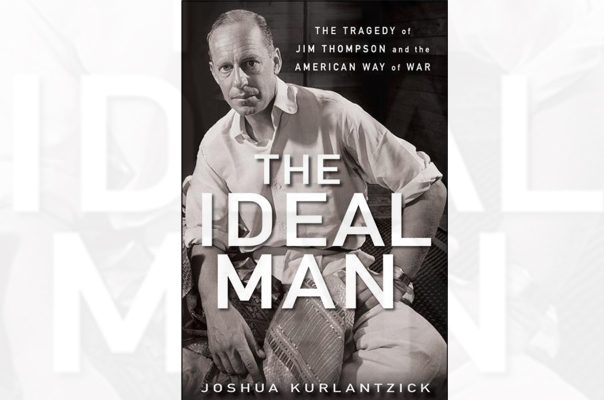

American journalist Joshua Kurlantzick’s recently published book, “The Ideal Man: The Tragedy of Jim Thompson and the American Way of War”, looks to be a fascinating examination into Thompson’s life and US diplomacy in Indochina between World War II and the Vietnam War.
The Atlantic recently published an excerpt of “Ideal Man” on its website, which absorbingly depicts the glamour and Cold War intrigue that coursed through Jim Thompson’s Bangkok.
Some highlights:
When Jim Thompson arrived in Thailand, in 1945, the United States’ global prestige had never been higher. “They Love us in Siam,” boasted one article in the Saturday Evening Post. It was true. While average people in Bangkok filled up any container they could find when water from bombed-out pumping stations actually flowed, Thais held massive parties for the Americans arriving in Bangkok after the Japanese surrendered. One American working in Thailand after the war remembered “a dinner which will live long in my memory” at the house of one Thai prince: turtle soup in fresh coconuts, lobster thermidor, goose, Thai curries, shrimp soufflé, and ice cream made from steamed bananas.
From his corner of Bangkok’s Suan Kularb Palace, where we worked for the Office of Strategic Services, the predecessor of the CIA, Jim Thompson, who was quickly gaining a reputation as the most knowledgeable foreigner about Indochina and the man with the unbeatable web of contacts, could easily see this love and respect for America. Or at least, love for the image of America in Thais’ minds. Thais he’d met once would come in and ask him to mediate in internecine family feuds or start a business with them; if he went to every party to which he got invited, he’d have to attend three or four functions every night. Thais came into the palace to drag the OSS men to local schools, where the children all wanted to see and touch them; even the teachers just wanted to grab them, to touch an American. Ann Donaldson, Thompson’s niece, remembered, “When people asked him whether he’d come back to the United States, Jim would always say, ‘No, there is too much to do here [in Thailand,] this is where I can make a difference.'”
…
After World War II, Bangkok became a hub for the Viet Minh’s spying, arms trafficking, and fund-raising — with Thompson fully supportive of the efforts. “Bangkok has become a home away from home for revolutionary elements from various Southeast Asian colonial areas,” reported one Asian newspaper. “The Vietnamese, partisans of Ho Chi Minh’s rebel government, regularly steal back across the Indochinese border.” In operations not approved by headquarters, Thompson would even help move weapons to the Vietnamese, Lao, and Cambodians, according to an internal U.S. government report. Thompson alone, with his left-leaning sympathies and clear love for Indochina, could arrange meets with the top Vietnamese, Lao, and Cambodian leaders.
…
In Thailand itself, his beloved country where he had now made his home, Thompson saw nothing but tragedy around him. Pridi, the democrat and ally of the U.S. in World War II, had been pushed out by autocratic generals eager to tout their anti-communism — and supported now by the U.S. Thompson helped Pridi flee the country. America launched a massive aid program that would, by the mid-1960s, make Thailand the staging ground for the Vietnam War, home to U.S. bases for long bombing runs, tens of thousands of American GIs, and hundreds of millions in American aid. Eventually, Thailand and the U.S. would sign a formal treaty of alliance, cementing American support for Thailand’s military leaders.
The new Thai government jailed Pridi’s allies — or worse. When the Thai security grabbed four politicians known for their leftist views, the men never made it out of police custody. When the police finally released the men’s dead bodies, the corpses were riddled with bullet holes and replete with signs of torture, including swollen eyes and ears, burns that likely came from cigarette butts, and shattered legs. The police insisted that the men had been shot while trying to escape. No policemen were harmed in the incident. “This has developed into the most tragic week I have ever spent in my life,” Thompson wrote to his sister Elinor after the first four men, all of whom he knew well, were murdered. “At this point I feel completely listless, let down, and useless.” Thompson’s nephew Henry happened to be with him when he learned his friends had been killed. “I’d never seen Jim so shaken,” Henry said. “It was like having your own brother killed.”
Thompson, a man who under Pridi had been treated almost like royalty in Thailand, now found himself under constant surveillance. Thompson told his sister Elinor that the police followed him everywhere, and he worried about even stopping at friends’ houses for fear of casting suspicion on them, too.
Still, he thought himself invulnerable. “I don’t think Jim ever considered, even after all his Thai friends were attacked and killed, that he could be hurt,” said one close friend. “He just considered himself untouchable, like no one would ever try to hurt someone who’d been as rich and powerful as him.”
The complete excerpt from the Atlantic is here.










