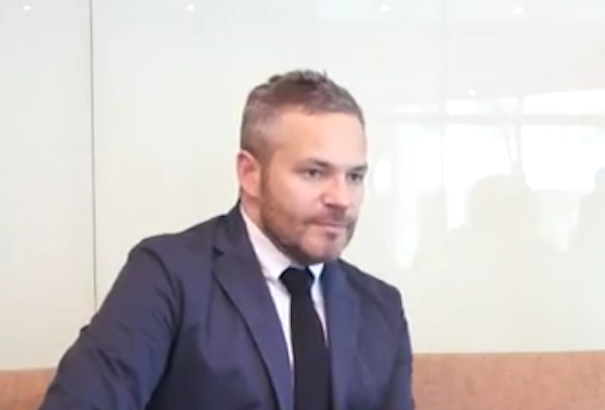

Tyler Brûlé, editor-in-chief and founder of “global affairs” magazine Monocle, has been hired by the Thai government to conduct an international public relations campaign for Thailand.
You’ve read that right: The editor of a magazine that bills itself as an independent authority on geopolitics has been hired as a glorified PR flack by a sovereign nation.
How ridiculous is that! (But then again, let’s face it: Monocle will never be taken that seriously on world affairs. By trying to present itself as an expert on everything – politics, design, infrastructure, art, fashion – the magazine reduces its credibility.)
Sure it might end up being a waste of Thai taxpayer’s money by the government, as some maintain, but it is also a glaring conflict of interest on the part of Tyler “Crème” Brûlé, as we like to call him. We can think of no other occasion where the sitting editor of a magazine has taken a job as a spin doctor for an entire country.
In this month’s Monocle there is a 36-page “survey” on Thailand, covering everything from finance to food to fashion to design to logistics to architecture. The report is resoundingly flattering and chock-full of phrases like “Thailand should be naturally positioned for a successful 2012” and “Thailand is well-poised to assert itself both regionally and globally.” Sure, it’s nice to hear so many kind words about Thailand and a lot of is it true, but shouldn’t a magazine that purports to independently report on world affairs have made note of some of the problems in the country?
Was this an advertorial? There is no mention of it being so anywhere that we can find in the insert – but on the back cover the URL modern-thailand.com is printed, which is the name of the campaign for Thailand that Brûlé has chosen. It was obviously part of the deal to “re-brand” Thailand to the world and it is disingenuous that it was not more transparently labeled as advertising.
So is Monocle’s editorial coverage for sale? If so, we can think of several cash-rich governments that are badly in need of a serious PR reboot and wouldn’t mind shelling out the big bucks.
Brûlé made no secret of the plan to gloss over all of Thailand faults in an interview with the Bangkok Post’s Voranai Vanijaka. When asked whether the campaign will mention Thailand’s perpetual weaknesses of political instability, corruption, and human rights issues, this is what he said:
“Those aren’t the theme of the campaign. No, we don’t have modern Thailand corruption as a theme. This is about having a positive narrative and also about Thailand controlling the message. The key thing is to come up with a campaign where there’s continued positive reinforcement of the message.”
Bangkok Post editor Onsiri Pravattiyagu perhaps had the best retort to this mentality in a follow-up opinion piece. She wrote, “By not acknowledging the negatives – from prostitution and the obscene wealth gap to crime and pollution – once again we’re back in denial, and those problems will never be taken care of if we continue to dodge the bullet, painting pretty pictures to please foreigners.”
And what about Monocle’s ever-so independent and scientifically devised Top 25 Most Liveable Cities annual list? Bangkok hasn’t made it in the list (which skews extremely expensive and European) any year since its inception, but we suppose a top 25 spot was part of the deal? And hey, if places like Helsinki, Zurich, and Munich are so damn great why are there so many Finns, Swiss, and Germans in Thailand, huh?
Slick print ads designed by Brûlé’s branding firm Winkcreative have begun rolling out in The Economist, Financial Times, IHT, and, of course, Monocle this month. To be honest, we’d never heard of Monocle till Brûlé came to town last year to speak at the TCDC, but it’s easy to see from a brief flip through that the whole magazine blurs the line between editorial and advertisement. Advertisements for GE and Lexus in the issue we got our hands on (for a cool THB545) looked suspiciously like features.
Besides that, the magazine exudes pretension and phoniness. Brûlé seems to have built an empire out of telling a certain breed of self-regarded jet-setting sophisticates what to think is cool and which products to buy – “global nomads” who “need advice on how to live a sophisticated lifestyle,” he told the New York Times for an article about his first magazine Wallpaper in 1998. More power to him.
But this latest gig is a mockery of a sham, because he is now blurring the line between editorial and advertising in his portrayal of an entire nation.
—