

If you visit Front Room at Waldorf Astoria Bangkok, its new Thai cuisine menu might surprise you. Known for its Nordic-style fine dining, this acclaimed establishment recently underwent a bold makeover, which included swapping its Nordic menu in favor of traditional Thai comfort food.
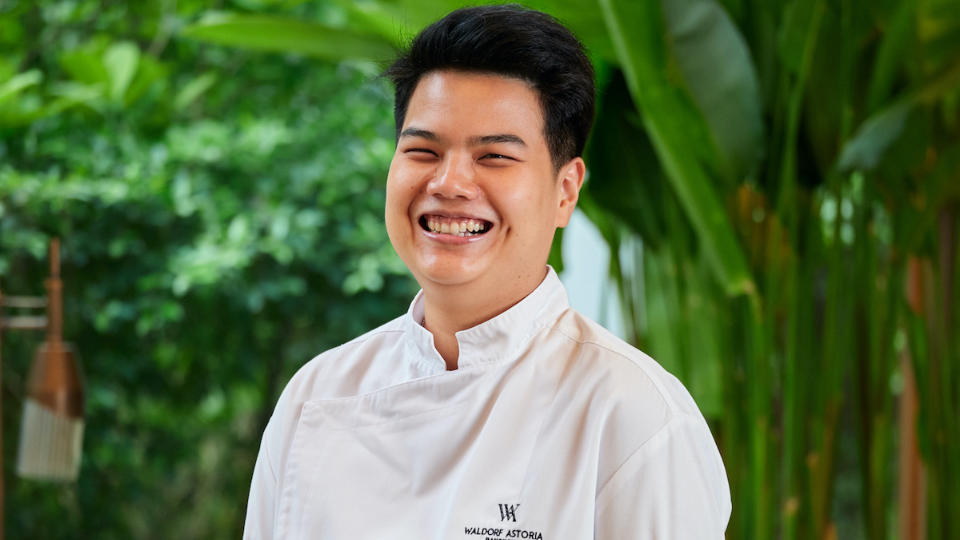
One of the masterminds behind this successful transformation is Chef Sarocha “Bua” Rajatanawin, who feels that credit should also be given to her mother. Among the many dishes that make her miss her childhood and mom’s cooking, a stir-fried pork and ginger dish called moo phad khing is her favorite.
“My mom cooks the best moo phad khing,” says the chef de cuisine of Front Room, who shares that her mother’s culinary finesse left an indelible impression on her. “I once ate her moo phad khing with steamed rice for an entire month, for every meal. I enjoy it very much and will usually share it with my younger brother.”
Chef Bua’s mother is Thai-Chinese and incorporates Chinese cooking styles into her Thai dishes. From her, she learned that too many ingredients and techniques can make a dish taste “confusing”.
“Understand, choose and balance your ingredients well,” advises Chef Bua, who loves using a Northern Thai ground chili paste in her cooking. She often uses prik larb chili paste, which comprises more than ten herbs and spices, to infuse Thai dishes such as spicy minced duck salad with a piquant aroma and flavor.
“Taste is most important. Similar to my mom, I use a wok, but I use different techniques when I cook. What’s important is my dishes must taste like authentic classics, and remind diners of their families and childhoods.”
Another chef whom Chef Bua cites as a major influence is Michelin-starred French chef Arnaud Dunand Sauthier, the former head chef of Le Normandie at Mandarin Oriental Bangkok. Chef Bua says that Chef Arnaud helped her understand that “less is more”, revealing: “When I worked with Chef Arnaud, he taught me not to use too many ingredients in one dish—focus on the top three key ingredients and use the other ingredients to complement them. I also learned new cooking techniques from Front Room’s consultant, Chef Ann Supanat Khanarak, that can make the same ingredients taste different.”
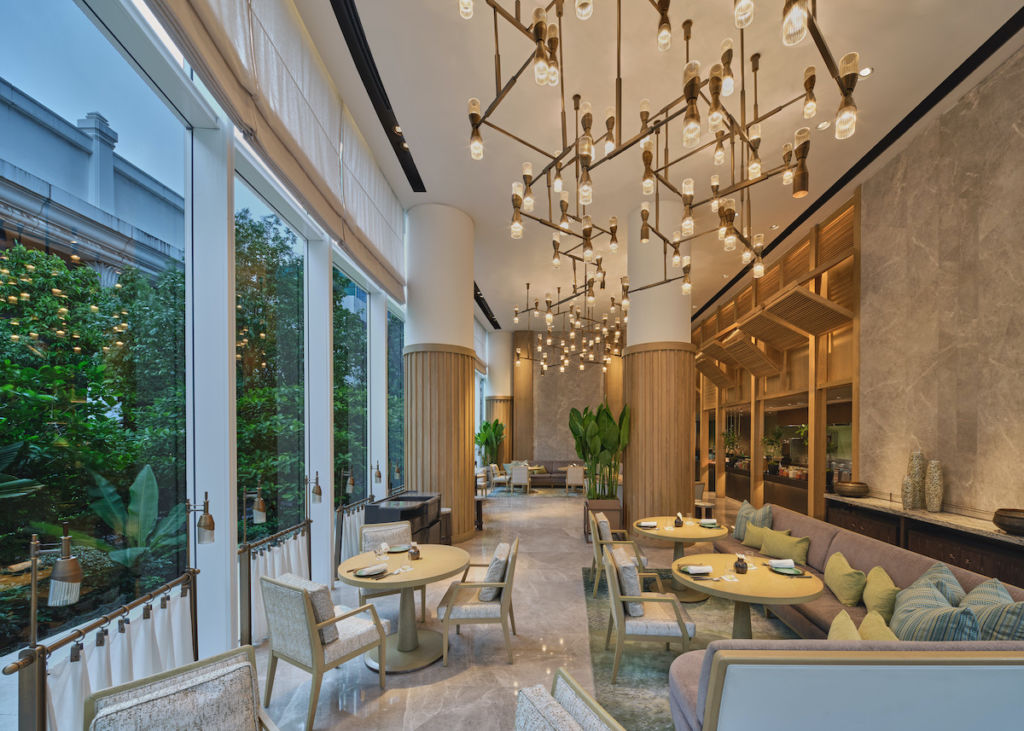
Besides the fantastic menu, guests will also welcome Front Room’s fresh new look – from plush seating and hand-crafted furniture to floor-to-ceiling windows that allow sunlight to accentuate the restaurant’s sophisticated details, which evoke Thailand’s natural landscape. As patrons soak in this opulent ambience, Chef Bua and team treat them to family recipes that have been passed down over many generations.
Coconuts had the pleasure of picking Chef Bua’s brain and finding out how she and her team built this new bastion and custodian of tradition.
Can you describe the kind of dining experience that you intend for guests of the revamped Front Room?
Chef Bua: We wanted to reopen Front Room as a Thai restaurant that serves delicious, authentic and comforting dishes that remind diners of ros mue mae (mom’s home cooking). We want diners to also enjoy a guest experience in line with Waldorf Astoria brand’s promise of innovative culinary excellence and True Waldorf Service.
Did anything in particular inspire you when you were creating Front Room’s new menu?
Chef Bua: I am inspired by the freshness of Thai ingredients like our local vegetables, coconut cream, herbs and spices. I incorporated many of these colorful and powerful ingredients into the menu. For example, we wanted to showcase Thailand’s different kinds of chilies that have different smells. The fresh and natural taste of each vegetable, herb and spice still surprises me until today.
Who did you conceptualize this menu with?
Chef Bua: The hotel team worked together with the consultants Dr. Niphatchanok Najpinij, a Thai gastronomy expert and full-time lecturer at Suan Dusit Rajabhat University, and consultant Chef Ann Supanat Khanarak, who has over 30 years of experience working at some of Thailand’s leading restaurants and hotels. They share the same vision as me that the best Thai food is home-cooked and should be shared among loved ones. Dr. Niphatchanok has spent her life researching and studying food. She introduced to us the concept that Thai food has eight distinct flavors—sour, sweet, nutty, salty, spicy, bitter, astringent and mild.
Were many family recipes incorporated into this menu?
Chef Bua: As we all agreed that the best Thai food is cooked by our mothers, each chef, including the consultants, brought recipes to share, cook and test. We also underwent intensive training with Chef Ann on the fundamentals of cooking Thai food. At the same time, the Front Room team is experienced in Western-style cooking techniques. Everyone added their creativity and understanding of fine dining to this process, so it was more like a collaborative journey. We shared, discussed and chose the best, so that we could deliver an epicurean experience befitting of Waldorf Astoria’s guests.
What do you have to keep in mind when structuring a traditional Thai menu?
Chef Bua: When creating a Thai menu, it is very important to offer enough variety from starters to main courses to desserts. For Thais, it is very common for us to eat samrub, which is the principle of combining and presenting dishes that complement one another in terms of ingredients, flavors, textures and tastes, so our team had to plan well. The starters complement the main courses and, sometimes, the desserts too. Each individual has a different palate, but we cannot adapt the dishes too much or else they will lose their authenticity.
Speaking of authentic home-cooking, during these unprecedented times, many of us are cooking at home more often. Could you give us an expert tip on how to prepare authentic Thai dishes at home?
Chef Bua: Select the right rice and cook the rice well. As we eat rice with everything, it is very important to buy the right kind of rice. Also, if you can’t finish your steamed rice, keep the leftover rice in the fridge, which will be perfect for a fried rice meal the next day.
As the local situation improves, people are slowly dining out more. What meal would you recommend to readers who want to dine at Front Room?
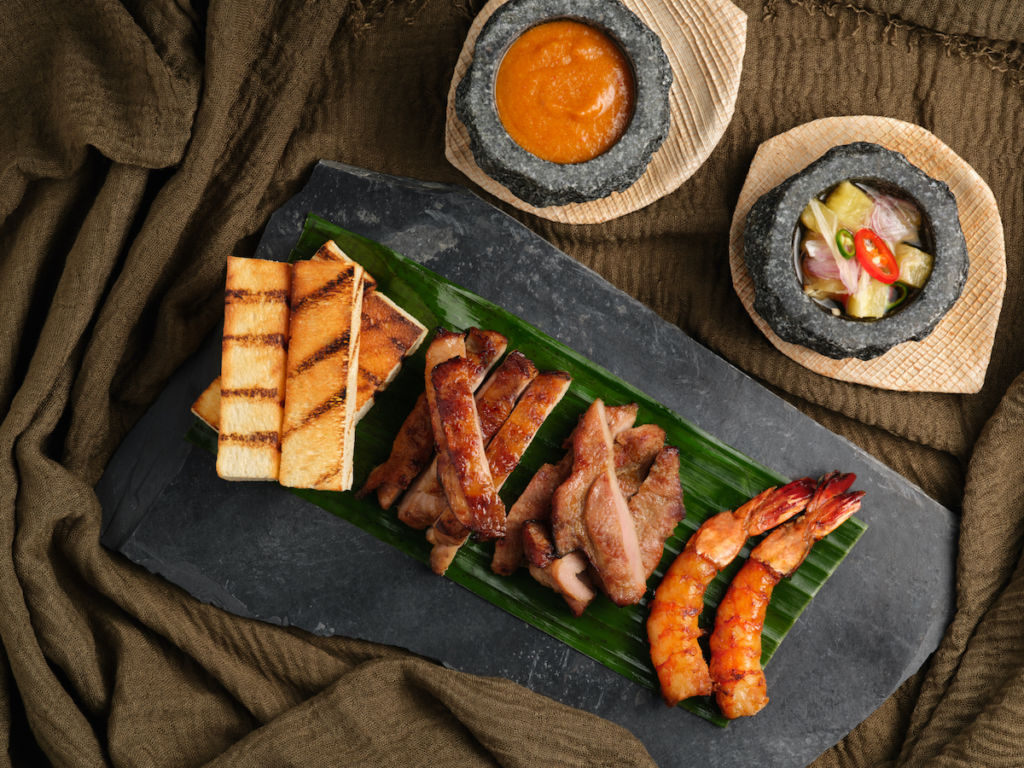
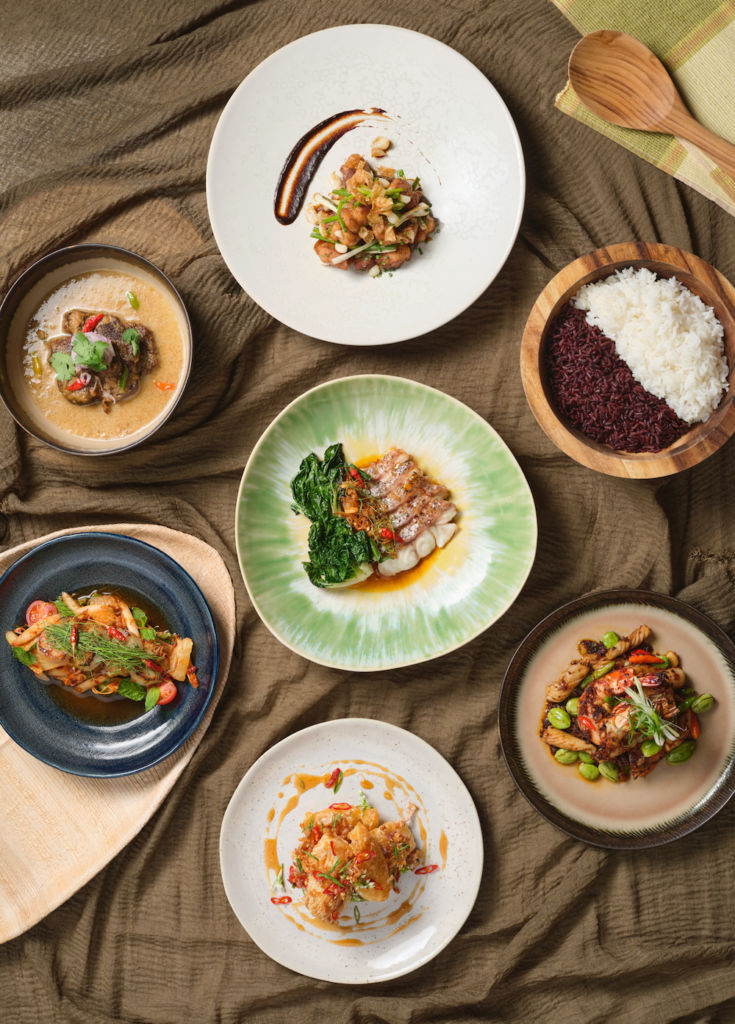
Chef Bua: Front Room’s cuisine is best enjoyed in a group and shared samrub style—multiple dishes that complement the taste of one another. Meat lovers will love Ruammit Yang, which is a mixed grill platter that includes marinated prawns, pork and minced pork served with coconut dipping sauce and pineapple relish. Try the spicy and refreshing Yum Gai Sheek Bai Paew, a Thai-style shredded chicken breast salad with Vietnamese coriander. For your main course, don’t pass on our Talae Gub Sator Kua Sauce Khem (stir-fried seafood with bitter bean and salty seafood oil), Nuea Khem Tom Kati (coconut broth, salted beef cheek, shallots and chili) and Pla Gao Nueng Phrik Larb Kua (grouper, shallot, garlic and fermented fish oil, served with steamed rice). End your meal with Front Room’s iconic Maphrao Cheesecake, which is a coconut cheesecake with young coconut jelly and white chocolate mousse.
Some people might still prefer takeaway or home delivery meals. Could you recommend a few menu items that “travel well”?
Chef Bua: Front Room’s popular amuse-bouche Chive Cracker is available for takeaway. A box of 10 pieces with sweet soy dipping sauce is priced at THB280++ per box. You might also like our Gaeng Phed Tai Pla Kraphong Bai Yira (Southern Thai-style seabass with coconut cream, taro stem and cumin leaf) and Moo Sam Shan Pad Grathiam Dong (stir-fried kurobuta pork belly with fermented garlic). The first one is spicy and the other is sweet, so they can be eaten together with steamed rice.
Could you also tell us about the plant-based dishes that your team recently created?
Chef Bua: To meet the rising demand for plant-based cuisine, our team combined our culinary skills and creativity to create exclusive plant-based dishes with full Thai flavors. Highlights include Phla Lai Bua (lotus stem with pomelo and homemade chili paste), Fong Tao Hu Hor Hua Chai Tao Thod (deep-fried tofu skin and steamed turnip), Gaeng Khiao Whan (green curry with plant-based meat, vegetables and coconut meat) and Sorbet Som Zaa (bitter orange sorbet, green mango and ginger served with deep-fried shallots).
Front Room is located in the Waldorf Astoria Bangkok, 151 Ratchadamri Rd, Lumphini, Pathum Wan District, Bangkok 10330. To make a reservation, call +66 2 846 8847.
Dine #LikeAMember at participating Hilton restaurants and bars in Thailand, and enjoy exclusive members-only discounts and privileges.