
COCONUTS CRITIC’S TABLE – The British have given the world some wonderful things. Monty Python, tiddlywinks, Branston Pickle – the list goes on. They have also spawned some things they might well be ashamed of, like the Opium Wars and Piers Morgan. Many would add British food to that list, but fish and chips is one contribution to cuisine the country can be proud of. While some might say the fish supper exemplifies the blandness that is surely the hallmark of British cooking, when done right it is a delightful dish, a supremely comforting melding of carbs, fat and protein that makes you feel like all is well with the world.
But what does it mean to do fish and chips right? An American friend once ordered the dish in a British-themed restaurant in the US. He was served battered fish with what we Brits refer to as “crisps”. Surely, this was wrong.
Nevertheless, it would be small-minded to say that the only correct way to do fish and chips is the way it’s done in Britain. Fish suppers are also popular in Commonwealth countries like South Africa, Australia and New Zealand. Just as the English spoken in those places has its own local character, fish and chips has been adapted to suit local tastes and produce. Are these regional variants any less valid than what you’d be served in, say, Whitby? It would seem boorish to claim so.
This brings us to Snapper. By this – stop sniggering at the back – I mean a newish restaurant off Sukhumvit Road which does fish and chips the New Zealand way. The joint, on the alleyway off Suk Soi 11 that already hosts expat fave Cheap Charlie’s, opened in February with a launch party attended by much of the city’s Kiwi community, including New Zealand Ambassador to Thailand Bede Corry and – presumably – Bangkok’s equivalent of Murray Hewitt.
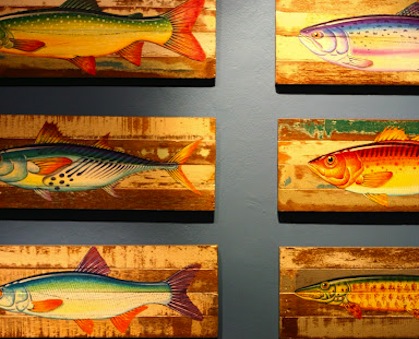
It’s a small restaurant, seating about 40. There are tables on a streetside terrace, though at this time of year you’d be mad – and/or a smoker – to choose the sweltering Bangkok climate over the air-conditioned comfort inside. Decor is pleasant and informal, with a theme you might call “Ahoy me hearties!” Walls are sea-blue and a fishing net hangs from the ceiling. The kitchen, as is common these days, is open, providing a ringside view of the chefs giving defenseless sea creatures a battering.
So far so good but the menu gets off to a poor start by being written in the touchy-feely font of doom, Comic Sans. This is lamentable. Restaurateurs: please put the “sans” in Comic Sans. On the front is a missive from the owner promising “Wild fish, fresh produce, great wine and beer, all delivered with Kiwi attitude.” I was unsure what this meant and wondered if the mostly Thai waiting staff had been drilled in Kiwi attitude. They seemed pretty Thai to me.
Anyway, the fontally-challenged menu is pretty extensive for a fish and chips establishment, with a lot of dishes that aim to showcase quality New Zealand ingredients. Among such offerings are mixed seafood skewers, yellowfin tuna tartar and a seafood chowder. There are a few salads and “gourmet burgers” using NZ beef, fish or lamb. But you don’t come to a place like this to eat burgers, do you?
Of the starters, NZ mussels were, to be frank, a disappointment, since the marinade seemed to consist of little more than vinegar. They’d benefit from a stint in the deep-fat frier. NZ fish bites, on the other hand, were lightly battered pieces of fish that augured well for the mains. That said, they were served with a sweet yoghurt dip, which seemed a bizarre accompaniment for battered fish (I guess this is a Kiwi thing?) We opted to plunge them in Snapper’s excellent homemade ketchup instead, and that made for some good eating.
All fish served at Snapper is imported from New Zealand. No cod or haddock here; no local grouper or sea bass either. Among the catches on the roster are fantastical-sounding creatures like tarakihi, blue warehou and red gurnard. You choose between a light batter or breadcrumbs, which will no doubt disappoint those expecting a thick, crunchy casing. The NZ lemon sole (THB220) was the best of the bunch, entirely because it had the most flavour. That flavour costs you THB40 more than the other fillets, however. Those looking for a more North Atlantic fish experience should opt for the hake (THB180), which with its mild flavour and big flakes most resembles cod. In general, the fish was a tad overcooked, though not enough to be a problem. This raised the importance of the dips, a choice between tartar and garlic aioli. Happily, both were very tasty, although the tartar lacked caper flavour.
The main problem with Snapper, however, is the chips. They, too, are imported from New Zealand – and obviously cooked from frozen. Considering this unfortunate provenance, they’re not bad. But a frozen chip can only ever be a poor relative of its fresh-cut brothers. If the restaurant is serious about serving the best fish and chips in Bangkok – and it’s clear the owners have put a lot into the place – they need to figure out a way to serve fresh-cut chips, pronto.
Snapper has taken a gamble – that the cachet and quality of the New Zealand ingredients it uses outweighs the freshness deficit that comes with transporting the produce ten thousand kilometers. Would it be better to use locally sourced fish and potatoes, which would surely be fresher and cheaper? That would dilute the Kiwi theme of the restaurant. Did Snapper’s fish suppers make us feel like all was well with the world? Perhaps not. But they made us feel like the world deserved a chance. And so does Snapper. I’m off for a plate of fish and crisps.
–
Coconuts Critic’s Table reviews are written based on unannounced visits by our writers and paid for by Coconuts Bangkok. No freebies here.
Follow Dan Waites on Twitter: @DanWaites