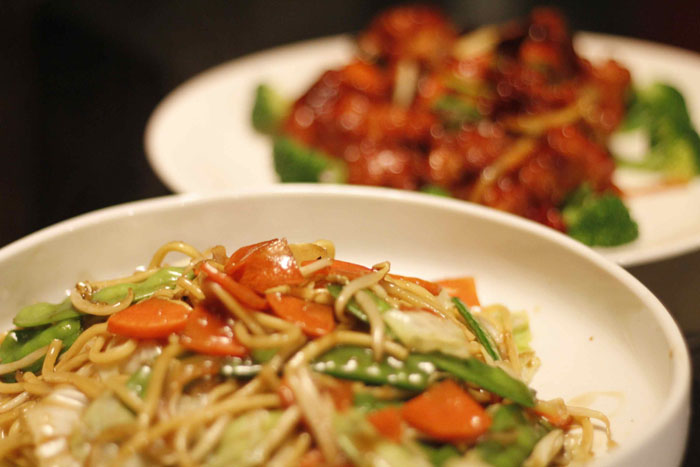

COCONUTS HOT SPOT — Civil strife and famine set off a middle kingdom diaspora, sending millions of Chinese around the globe. Those emigrating landed in Southeast Asia, Australia and even as far away as the Americas. Naturally the cuisine followed, and Chinese cuisine in one form or another can be found almost anywhere on the planet.
It was in the United States, however, that Chinese food evolved in a most peculiar way, a way that took the cuisine furthest from its roots. While helping build the transcontinental railroad in the late 1800s, Chinese laborers were forced to adapt their own cuisine to the American palate using new world ingredients (broccoli and carrots aren’t native to China), toning down the exotic flavors and making dishes sweeter and thicker. This hybrid Chinese cuisine steadily grew in popularity until the 1950s, when canning proliferated. Canning technology allowed the cuisine to reach a widespread audience, and to make it even more confusing, regional variations started to spring up and “American Chinese” became part of the larger mishmash of what is considered “American” cuisine.
Americans love this gloopy, sticky, dulcified food. The Jewish population has embraced it as their go-to on holidays where everything else is closed; stoners have championed it as the standard “gourmet” meal to order after hitting the bong, and just about everyone else eats it regularly. It’s a North American staple.
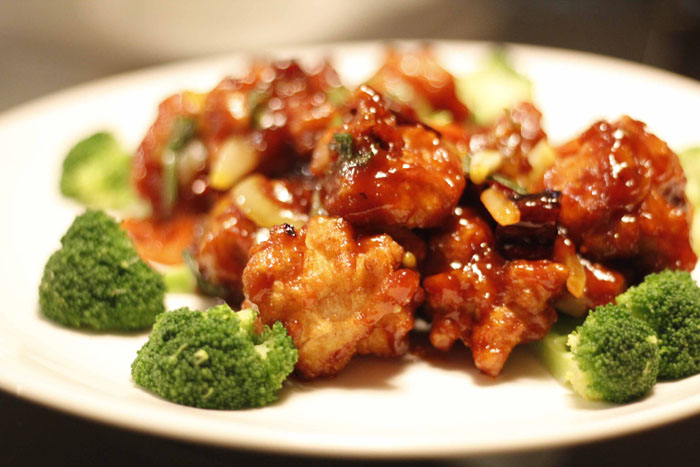
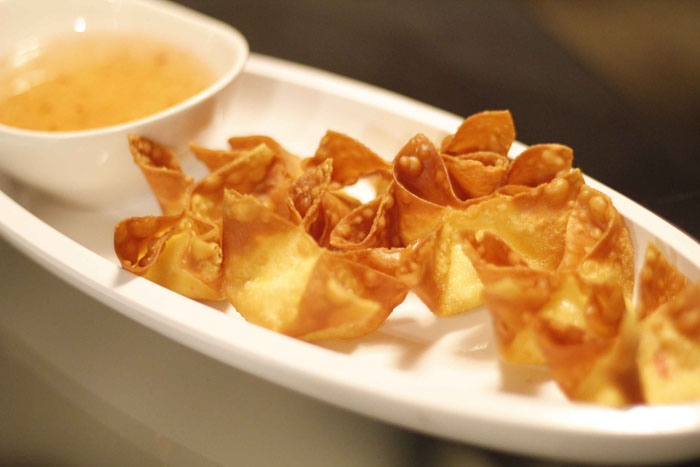
Enter Fortune Cookie Restaurant, a four-month-old delivery service bringing this pseudo-Chinese fare to the City of Angels. The menu looks like it came straight from Spring Garden, a one-table Chinese take-out joint that filled my childhood with delicious memories, MSG (which doesn’t deserve the reputation it’s earned), and a false understanding of what “Szechuan” and “Hunan” Chinese cuisines are.
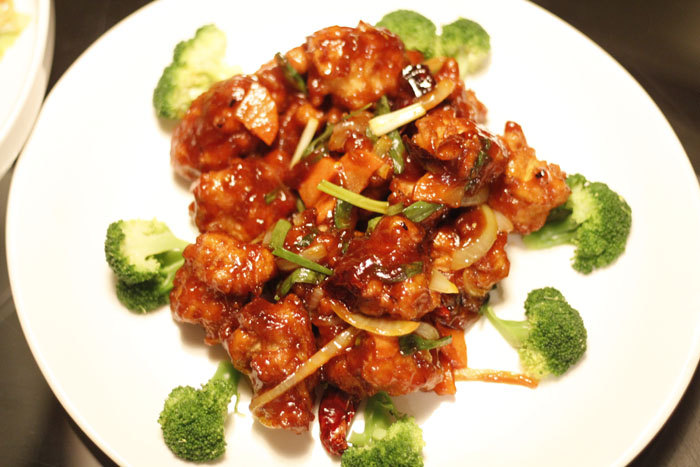
There’s General Tso’s chicken, chop suey, lo mein, sweet and sour pork, moo shu pork, salt and pepper squid, kung pao chicken…if you’ve been to a Chinese restaurant in the United States then you know what to expect, but does Fortune Cookie nail that American taste?
In short, yes.
I grew up with the mid-Atlantic version of “Chinese food”, and that means proteins slathered in a thick, gooey sauce, served with some sort of vegetable(although no one really eats those) and a side of rice. The man behind the operation, Dan Koh, was schooled in all things American-Chinese in Maryland, a state that has thoroughly embraced this cuisine. In a blind taste test, I wouldn’t be able to tell the difference between the Fortune Cookie’s General Tso’s made in Bangkok and the General Tso’s made in New Jersey. The Chinese-American pioneer doesn’t substitute Thai vegetables for the American variety, and they don’t tune the flavor profile to the Thai palate, and that’s a good thing. You get the satisfying, deep-fried, wok-cooked goodness with no Thai-spin.
At the moment, Fortune Cookie only delivers; there’s no option to eat in. Authentic Chinese American joints are mostly take-out, anyway. The cuisine is geared toward nights in with a friend or significant other, a movie that doesn’t require thinking, sitting on a comfortable couch in clothes you wouldn’t wear to work and talking about trivial matters.
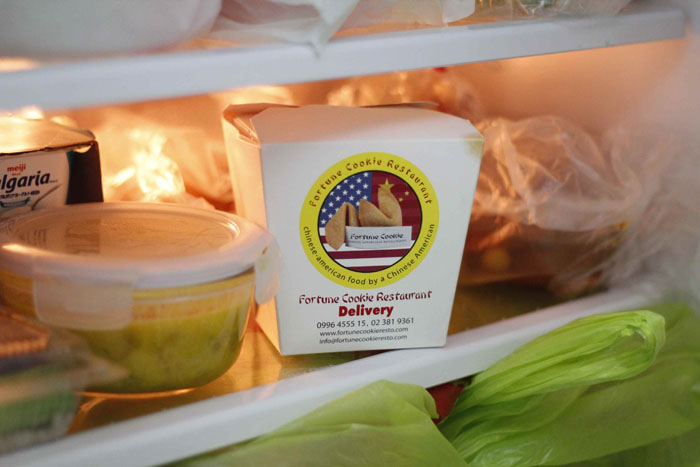
And the real test? See if the food is even better after keeping it the fridge for a day and then reheating it. The General Tso’s, Chow Mein, and Sweet and Sour pork passed with flying colors. There must be some sort of magic chemistry that occurs during the temperature fluctuations that brings out the “good stuff” in those viscous, gooey sauces, because it really does take it to the next level.
American expats and even their counterparts from across the pond and down under will totally get this cuisine, but the question remains: Will Thais embrace Chinese-American fare? It remains to be seen, but the stay-at-home-and- watch-dramas culture is strong here, and Fortune Cookie’s fare can really take that experience to the next level.
FIND IT:
099-645-5515