
For many years dek wan (teenage motorcycle racers), have plagued the sois, highways and back alleys of Bangkok and the rural areas of the kingdom. The racy sub-culture embodies everything it means to be a young adult male: recklessness, pugnacity, the need for speed, the invincibility complex, and of course the hormone-fueled need to impress women.
Marked by tattoos, bad hairstyles and obnoxiously loud motorcycles, these large groups of riders, sometimes hundreds in numbers, make up the underground illegal racing scene. Their strength in numbers and fiery temperament allow them to stop traffic with few people, often including the police, asking any questions.
No helmets, speeds in excess of 200 kilometers per hour and a blatant disregard for traffic has cost many of these teenagers their lives, and the local media has ensured everyone knows about it by publicizing the half-assed traffic safety campaigns put on by the police to stop illegal racing.
However in recent months the media has been bringing to light an unexpected new group of illegal street racers: the young and privileged ultra-rich.
Though their prim and proper getups, slick hairstyles and designer sunglasses separate them from the dek wan, the same unavoidable desire to go fast and show off their modified whips plagues them both – except this time the obnoxious (but beautiful) roar comes from the tailpipe of a 20 million THB Lamborghini Gallardo and not a 125cc Fino.
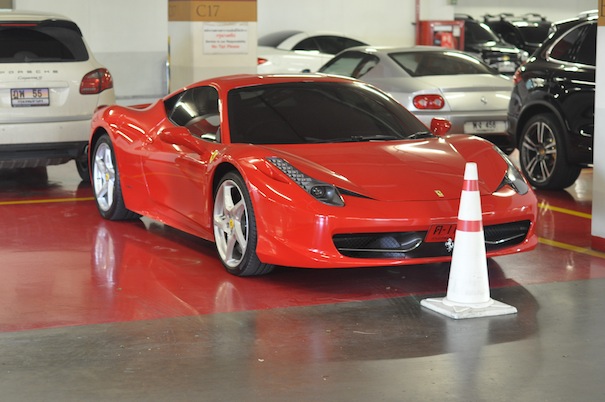
The drivers in question are often wealthy university students who happen to be the children of MPs and prominent Bangkok businessman. To get an idea of what kind of cars these kids drive just take a look at the repertoire of supercars parked outside Ekkamai’s Demo on a Friday night, or take a stroll through ABAC or Rangsit University’s parking complex where the value of autos on display might amount to more than an entire province’s GDP.
These new drivers are getting behind the wheels of cars that are as powerful as a herd 550 horses stampeding down the tollway. They’re becoming a weapon by turning the key, as their driving skills are often no match for their ego.
So what’s causing the recent spark of concern?
Late last month Pol Maj Sakdipat Pathumarak, the son of Charmaine Pathumarak, a former deputy agricultural minister, perished in a street race involving a Porsche and a Toyota Fortuner, according to The Bangkok Post. Both Sakdipat and the man driving the Porsche who also died were found to be drunk.
In response to the accident, Pol Maj-Gen Worasak Nopsittiporn said in a press conference “We know luxury cars racers aren’t afraid of fines. They’re rich.” He hit the nail on the head, as just last year we saw a freshman Rangsit University student pay a meager fine of just THB300,000 after cutting a Laotian teenage girl in half with his speeding Porsche Cayman; in other countries that would warrant a much larger fine and a hefty jail sentence.
Although she may not have been racing, Orachorn Thephasadin na Ayudhya,17, managed to kill nine people last year by running a van full of students and lecturers of the road. She was 16 and driving without a license. Although she was charged she managed to avoid having to suffer any real punishment. If folks can get away with killing people behind the wheel, surely a little street race wont land them in any hot water.
With little to no penalty for these sorts of actions, it’s difficult to tackle the situation head on.
Instead of trying to address the problem on the roads and lock these rich kids up, the Thai government is considering the banning of importing luxury sports cars. Our guess is that the majority of Porsches, Ferraris and Lamborghinis are NOT owned by street racing teens. However by doing this, they run the risk of punishing any responsible individual looking to own a luxury sports car.
Current laws allow Thais living abroad to import a car that was purchased abroad back into Thailand; and there has been a recent spike in cars being imported this way. Either more Thais are being educated or working abroad, or clever people are finding ways to use this clause to get these sports cars in the country.
The dek wan problem is still very much alive, but police have succeeded in rounding them up by the dozens and impounding their bikes. We suspect it might be a bit harder to take away some of these multi-million baht supercars belonging to the privileged youth.